
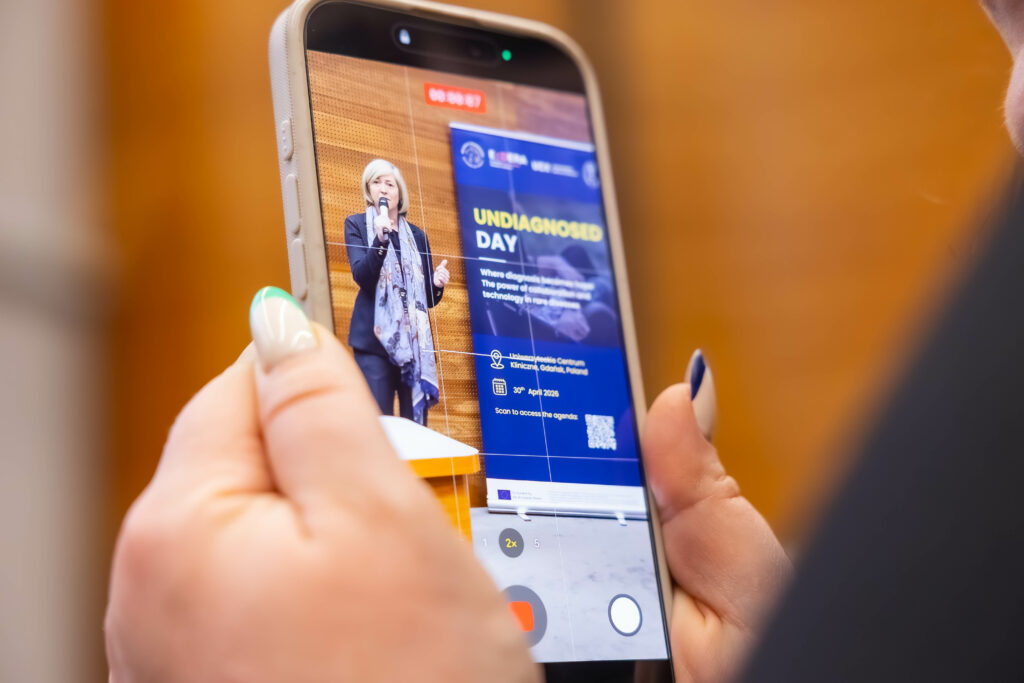
Undiagnosed Day 2026 in Gdańsk, Poland, closed after two days of discussions centered on one of the most persistent challenges in rare disease care: how to move diagnosis forward when the answer is not obvious, and how to support patients and families when uncertainty remains.
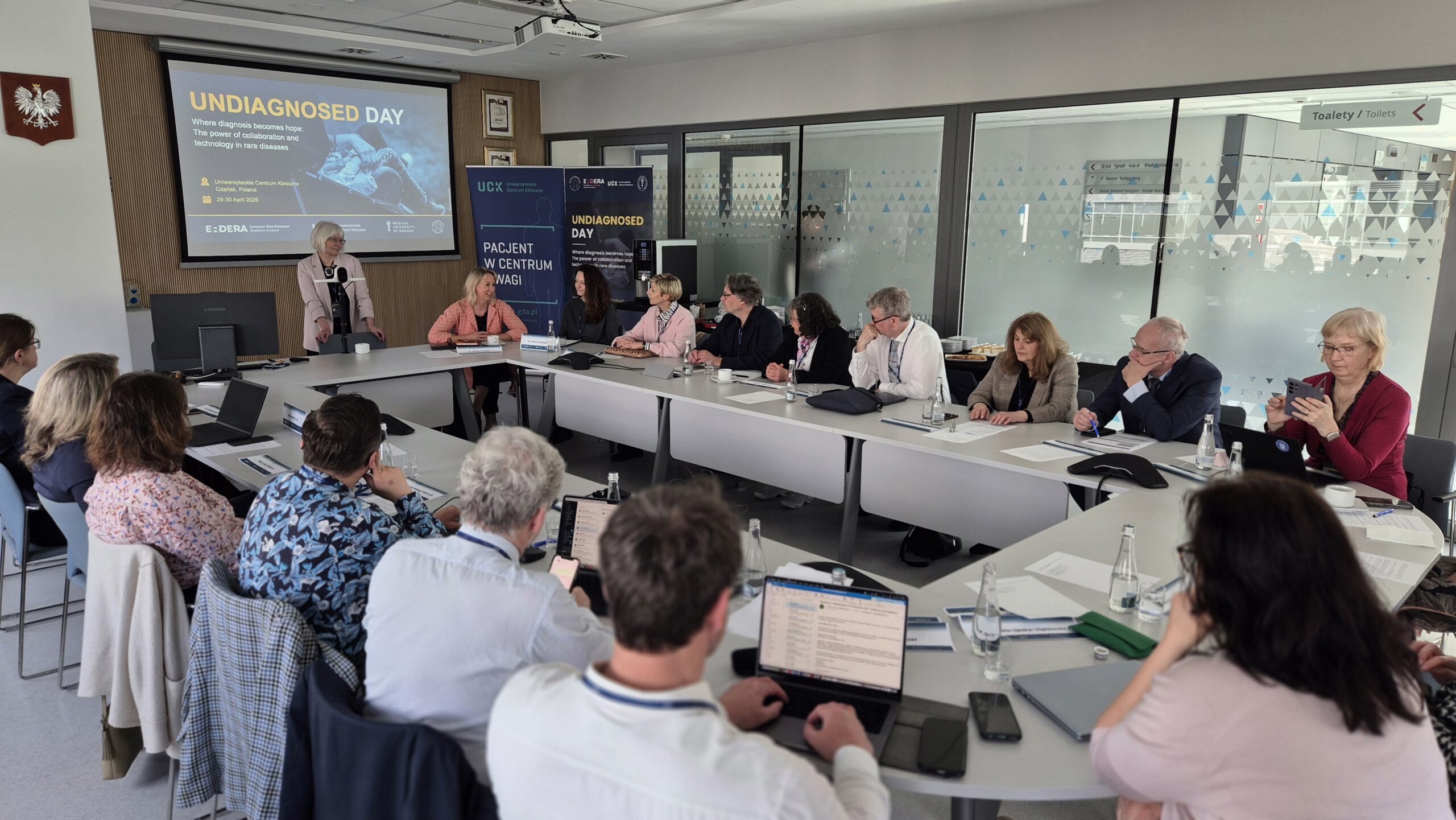
Organised by the European Rare Diseases Research Alliance (ERDERA), the Wilhelm Foundation, the Medical University of Gdańsk and the University Clinical Centre in Gdańsk, the meeting combined a closed phenotyping round table on 29 April with an open conference on 30 April.
The format reflected that intention: it linked specialist clinical assessment with multidisciplinary discussion involving patients and families. Alongside clinicians, clinical geneticists and international specialists, families of undiagnosed children took part in discussions about difficult cases and the broader implications of delayed diagnosis.
The Centre for Rare Diseases in Gdańsk has long worked in that interdisciplinary space. “For about 20 years, we have organised an interdisciplinary system for patients with genetic and rare disorders,” said Professor Jolanta Wierzba. “What is important is that we try to do it not only from a medical point of view, but through observation, considering the social side as well.”
The principle was echoed by Maurizio Scarpa, Coordinator of the European Reference Network for Hereditary Metabolic Diseases (MetabERN), who argued that progress depends on assembling expertise rather than isolating it: “When neurologists, geneticists, metabolic specialists and others come together, we create a critical mass of ideas and experience that can help the patient. If you are alone, you do not go anywhere.”
Phenotyping, interpretation and clinical context
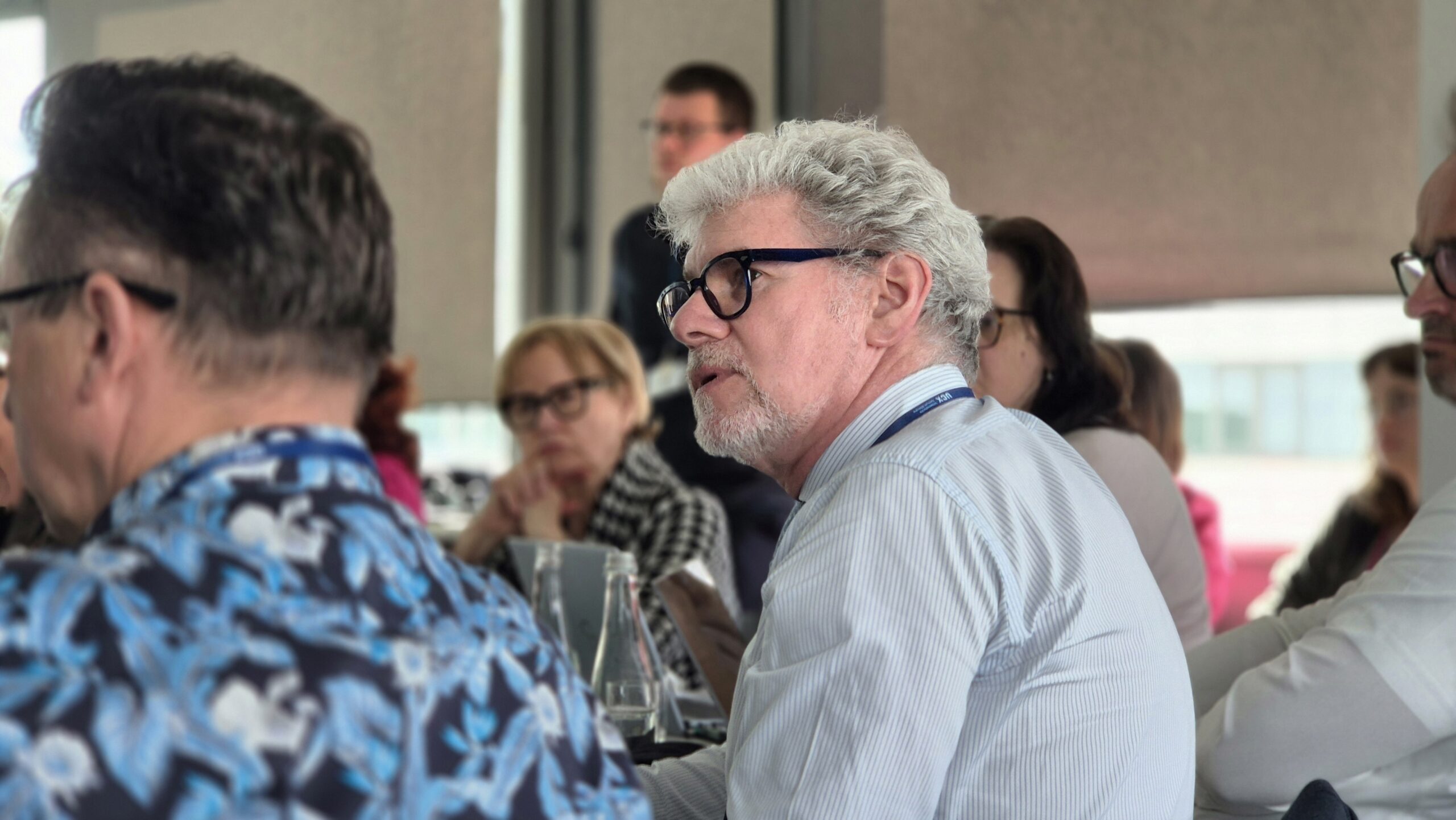
The first day’s closed round table focused on phenotyping, the detailed description of a person’s clinical features that often determines whether the right diagnostic hypothesis is considered in the first place.
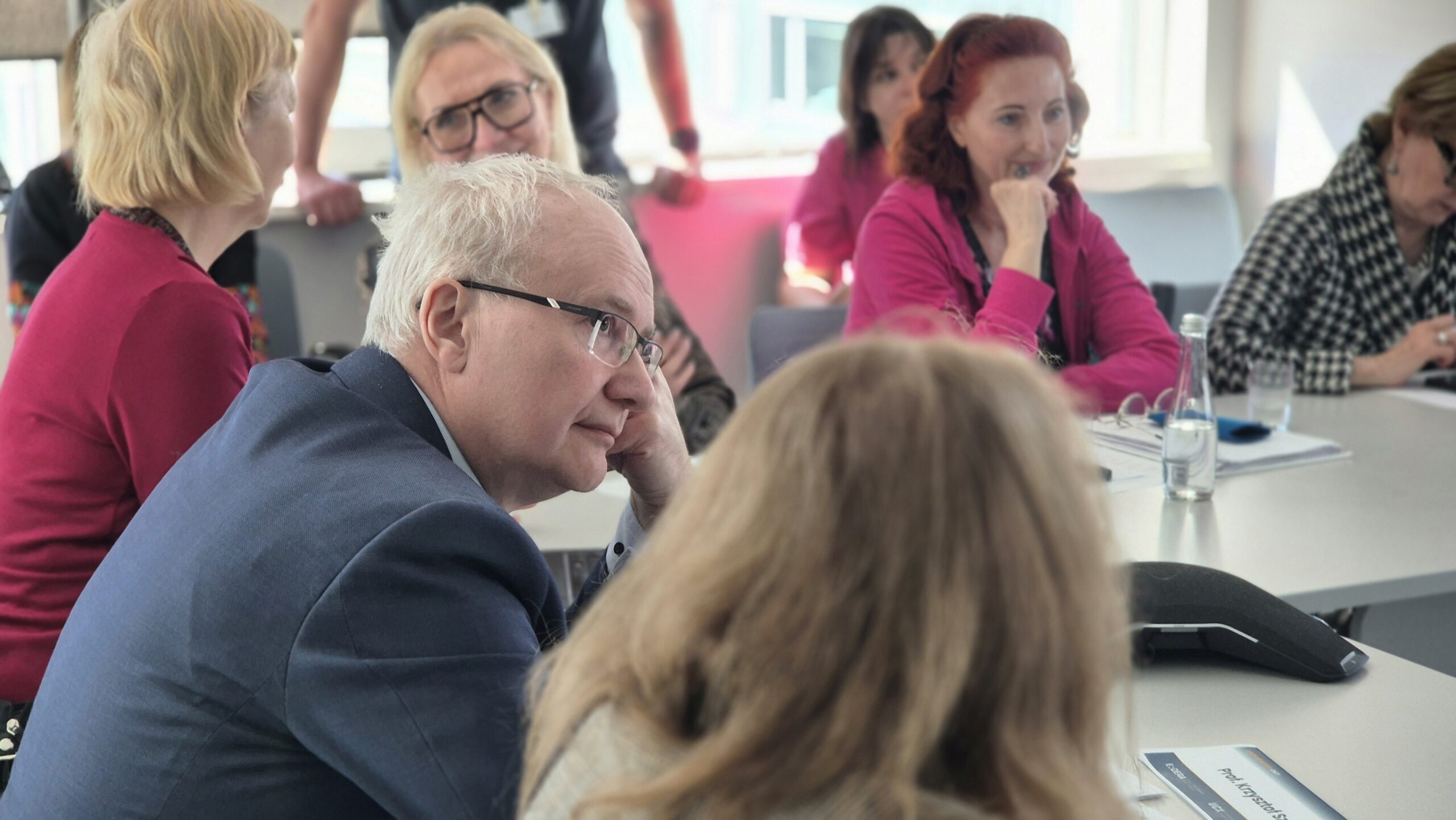
Children and teenagers with undiagnosed conditions entered the room one by one with their families while doctors presented their cases and experts discussed symptoms, patterns and visible characteristics that might help move each case forward.
The experience highlighted a practical issue in rare disease diagnosis: even when advanced sequencing technologies are available, results still need careful interpretation. As Dave Pearce, Chair of the International Rare Diseases Research Consortium (IRDiRC), explained: “In rare diseases, you may only be looking for one change in those 3 billion letters, so it can be very easy to miss in such a large data set. But out of those 3 billion, we only know what 5% actually does. So in 95% of those letters, we may be looking for a change, yet when we see one, we do not know if it is significant or not.”
This reflected one of the meeting’s main themes: testing alone does not resolve every case. Clinical interpretation, comparison across cases and discussion between specialists remain part of the diagnostic process. In that context, phenotyping was presented as a complement to genomic analysis rather than a separate approach.
The round table was highly technical, but it was also emotionally charged. Attending families described a medical pathway marked by loneliness, prolonged uncertainty and repeated trial and error. For some, the experience of presenting a child in front of a room of experts felt exposing. Yet several also described a sense of relief afterwards: even without an immediate answer, they no longer felt they were facing that uncertainty alone.
That tension between exposure and relief is one of the less visible realities of undiagnosed care. When diagnosis is delayed, families often become the navigators, organisers and advocates for their children across healthcare and other systems. Delayed diagnosis can also affect the wider family, including decision-making, coordination of care and expectations about the future.
“Late access to diagnosis is not just late access to treatment. Late access to diagnosis equals loss: it may be the loss of an available treatment, or the possibility to develop one. It could also be losing the chance for developmental windows”, said Maja Bartoszewicz-Moritz, Patient Council Coordinator at Rare Diseases Centre at the Medical University of Gdánsk. “Ultimately, in some of the rare diseases late access equals the loss of life”.
Access, systems and fragmentation
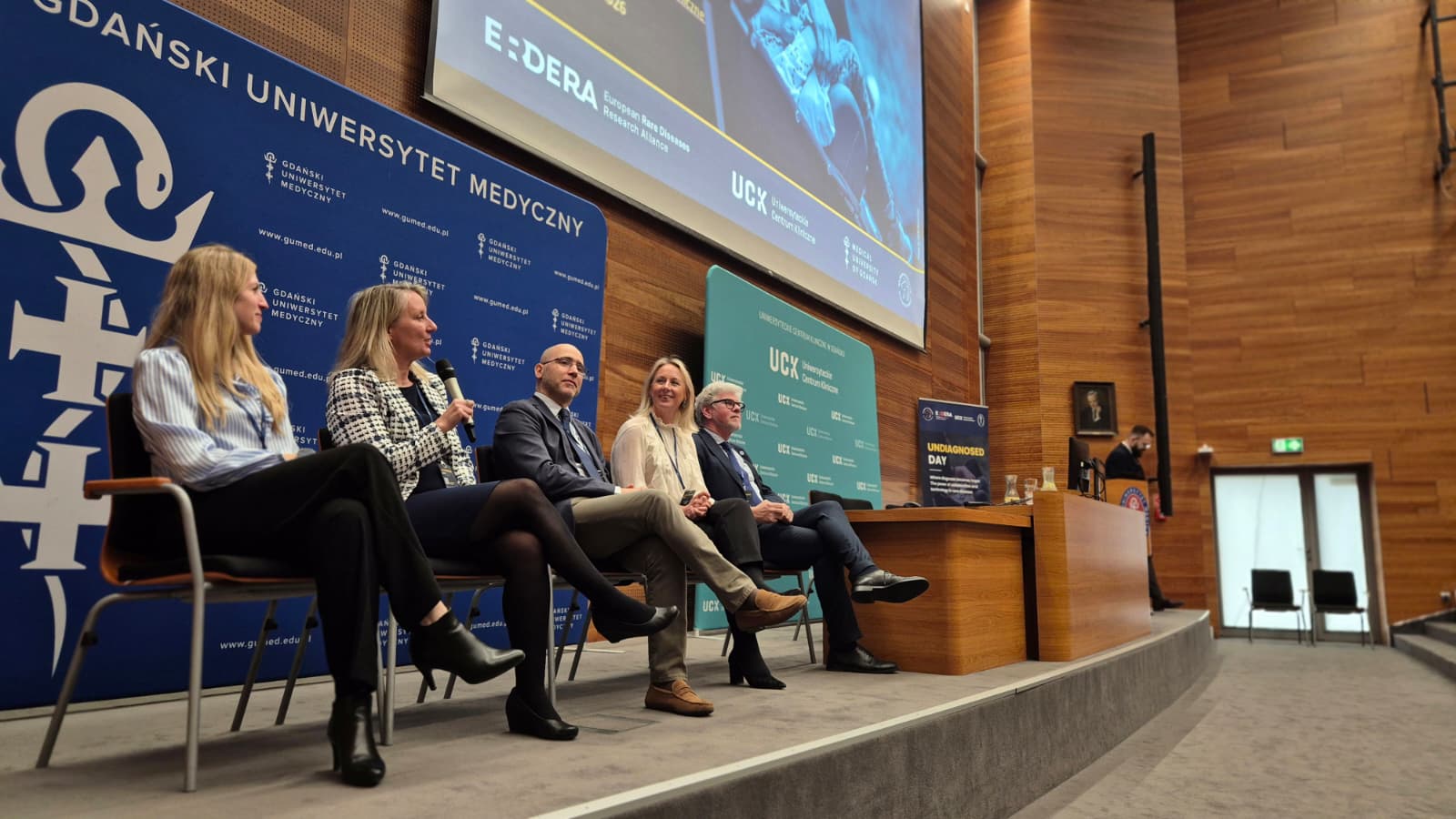
If the first day concentrated on individual cases and clinical reasoning, the second day focused on systems, access and policy. The open conference addressed modern diagnostics in undiagnosed conditions, data sharing, interdisciplinary cooperation and the question of what happens when no diagnosis is found.
Speakers referred to several practical barriers that continue to affect access to diagnosis, including the growing role of next-generation sequencing, the need for time and expertise to review difficult cases collectively, and the availability of procedures such as whole-exome sequencing and whole-genome sequencing through public funding mechanisms.
The discussion also considered the effect that prolonged diagnostic uncertainty exerts on health systems. The Wilhelm Foundation’s co-founder Hélène Cederroth argued that the absence of a diagnosis can lead to repeated investigations and less targeted care. “For health systems, undiagnosed conditions are extraordinarily costly. Without a diagnosis, care can become a fragmented cycle of repeated investigations, emergency admissions and, in the most serious cases, intensive care,” she said. “Diagnosis reduces complications, decreases trial and error, and use resources in a more targeted and effective way. It is the first step on the path to care and treatment.”
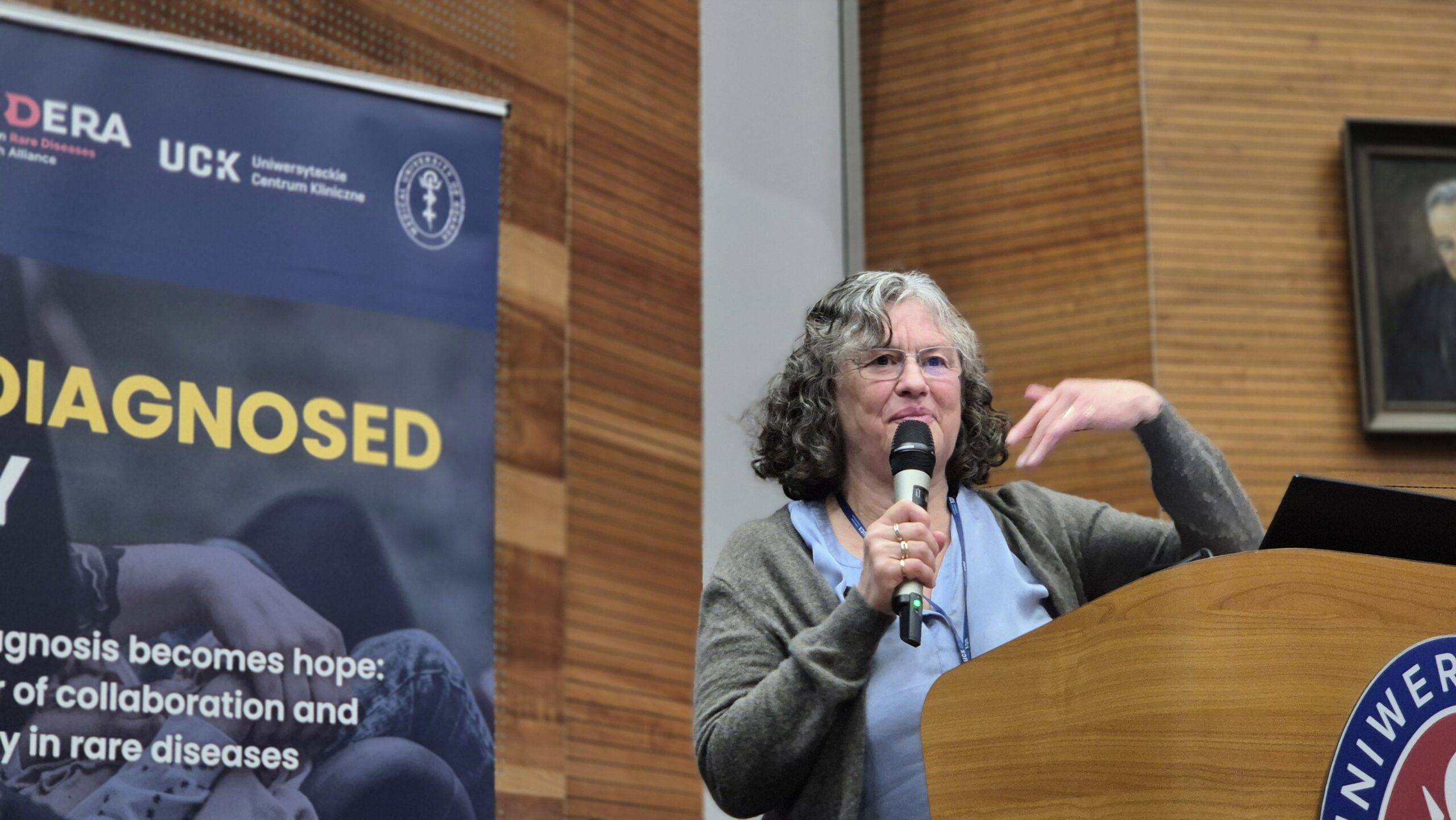
In Gdańsk, this issue was discussed alongside broader concerns about fragmentation across healthcare systems. Speakers said fragmented pathways affect continuity of care, access to expertise and decision-making. Maurizio Scarpa linked this to wider European discussions on more coordinated research and access frameworks, including the recent European Parliament 28th Regime initiative: “The 28th regime is, in many ways, a strategy: to be more flexible, more unified, less fragmented and quicker. It could help clinical trials start and be launched more rapidly and access to medicines faster and more evenly distributed across Europe. We need a more uniform, more homogeneous way of dealing with people’s health, and this could be a good place to start.”
The timing of the meeting gave that discussion added relevance. Across Europe, attention is increasing around an upcoming rare disease action framework covering diagnosis, treatment access, research coordination, data infrastructure, patient support and governance in a more integrated way.
That wider perspective was also reflected in the presence of patient organisations, which are part of the infrastructure that helps families navigate uncertainty, connect with one another and remain visible. Aleksandra Sobieska-Listewnik, who works with the Williams Syndrome Association in Poland and supports the wider rare disease movement, said: “Associations like ours are a constant a reminder that patient organisations do more than offer emotional support: they sustain knowledge, continuity and community around lives too often left to navigate fragmented systems alone”.
What Gdańsk made clear
Across the two days, several themes recurred: progress for undiagnosed patients relies largely on clinicians and geneticists working together on phenotypic and genomic data being interpreted in concert, on coordinated follow-up when answers do not come immediately, and on keeping families visible in a process that can otherwise feel overly procedural and isolating to them.
That is also the logic behind ERDERA’s wider diagnostic research work, which links data readiness, genome re-analysis, innovation in complete genome analysis and support for underrepresented countries to the practical goal of shortening time to diagnosis. “In rare and undiagnosed conditions, diagnosis is a collective process of observation, interpretation, care and persistence”, said Daria Julkowska, ERDERA Scientific Coordinator. “For those affected and their families, who may have spent years in the dark, that process can already change what the journey feels like — even before the final answer arrives”.
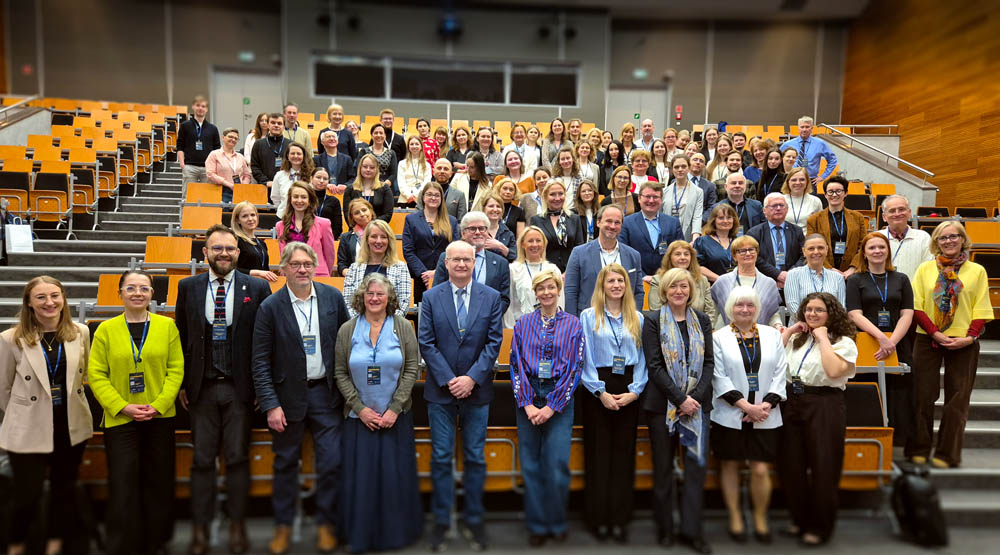
Main Picture by P.Sudara/UCK