The assessment compares diagnosis, treatment access and national governance across 16 countries, examining gaps in rare disease support throughout the life course.
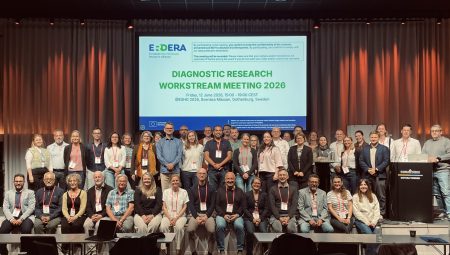
At the European Human Genetics Conference 2026 in Gothenburg, ERDERA’s Diagnostic Research Workstream reviewed progress, highlighted early results and used a major European genetics meeting to examine how advances in data sharing and genomic analysis may strengthen rare disease diagnosis across countries.
Sweden has adopted its first national strategy for rare health conditions, aiming to improve coordination, equity and access to care between 2026 and 2030.
Members of the International Rare Diseases Research Consortium examine how pandemic preparedness models could inform a coordinated global approach to rare disease diagnosis, research, care and therapeutic development.
The session will introduce the workstream’s activities in data sharing, systematic diagnostic reanalysis, advanced diagnostic pipelines, and genomic and multi-omics innovation.
Bringing clinicians, researchers, patient representatives and families together, the event examined how shorter diagnostic pathways depend not only on better tests, but on shared expertise, structured phenotyping and patient-centred support.
ERDERA and the European Genomic Data Infrastructure have signed a Memorandum of Understanding to strengthen collaboration on secure cross-border access to genomic, clinical and other health-related data, supporting rare disease research and the development of personalised medicine in Europe.
ERDERA interviews Prof. Radka Kaneva and Dr Petia Stratieva, two leading members of Bulgaria’s National Mirror Group (NMG), to explore how the country is working to align its rare disease ecosystem with European developments.
The Czech Republic has adopted a new national strategy for rare diseases, setting priorities for coordinated, patient-centred care and stronger integration with European initiatives over the next decade.