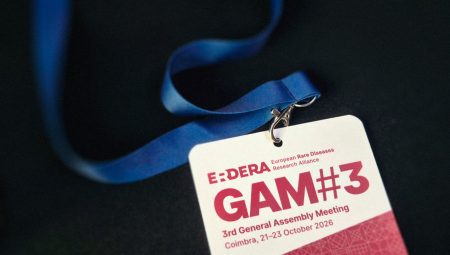
The European Rare Diseases Research Alliance (ERDERA) marked the launch of MOLGENIS-RD3 for internal use within its Diagnostic Research Workstream at its third General Assembly Meeting. RD3, short for Rare Disease Data about Data, is a database built using MOLGENIS, an open-source software platform for managing research data. It helps teams track information about research participants, samples, experiments and the files they produce.
RD3 records information describing research data, known as metadata, so teams can see what is available, where it is held and which experiments have been carried out. It provides an overview of research activities without requiring all the underlying data to be stored in one place.
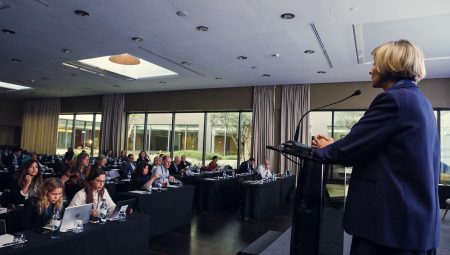
The internal launch took place during a breakout session on federated analysis, which explored how ERDERA’s Clinical Research Network and Data Services Hub could connect research needs with data tools and services. Federated approaches allow teams to work across resources held at different institutions without necessarily transferring the underlying data to a central database.
Following research from submission to results
Developed at the University Medical Center Groningen in the Netherlands, RD3 was already part of the infrastructure used in Solve-RD, a European project investigating unresolved rare disease cases. There, it linked records about participants, samples and experiments to research files, including those held in the European Genome-Phenome Archive. This helped researchers identify relevant data and locate them for analysis.
Its development for ERDERA reflects a collaborative effort within the Diagnostic Research Workstream. During the session, Morris Swertz, professor of bioinformatics and head of the Genomics Coordination Center at the University Medical Center Groningen, explained how RD3 is supporting the workstream. Its uses include managing submissions for new molecular analyses and recording experiments and their parameters: details of how an experiment was performed.
The intended workflow also includes bringing results back into RD3. This would allow clinicians to follow which analyses have been carried out for their patients and see the findings alongside the relevant research records.
Connecting information across institutions
Further development aims to make separate RD3 databases searchable using a shared standard. Work on a Beacon interface could allow researchers to query multiple RD3 databases and establish whether relevant records are available at other sites. Finding those records is distinct from obtaining access to the underlying data or analysing them.
The session also outlined an ambition to implement parts of RD3 within registries run by European Reference Networks (ERNs), which connect specialist healthcare teams across Europe. The aim is for distributed resources to communicate using a common approach. These registry connections and cross-database searches remain development goals.
The internal launch provides a basis for further collaboration between the Clinical Research Network and Data Services Hub on data discovery and federated analysis. For clinicians investigating unresolved cases, the practical aim is a clearer record of available data, completed experiments and research findings to inform the next steps in pursuing a diagnosis.