
From 25–28 May, the 2026 Open Academy x ERDERA Schools will bring together patient advocates and early-career researchers for intensive, in-person training linked to rare disease medicines research and scientific innovation.
These Schools are organised by EURORDIS–Rare Diseases Europe through its Open Academy and supported by the European Rare Diseases Research Alliance (ERDERA). They connect EURORDIS’ long-standing role in patient advocate training with ERDERA’s wider commitment to building capacity across the rare disease research ecosystem.
That connection is important because patient expertise, scientific knowledge and practical research skills need to work together from the earliest stages of evidence generation.
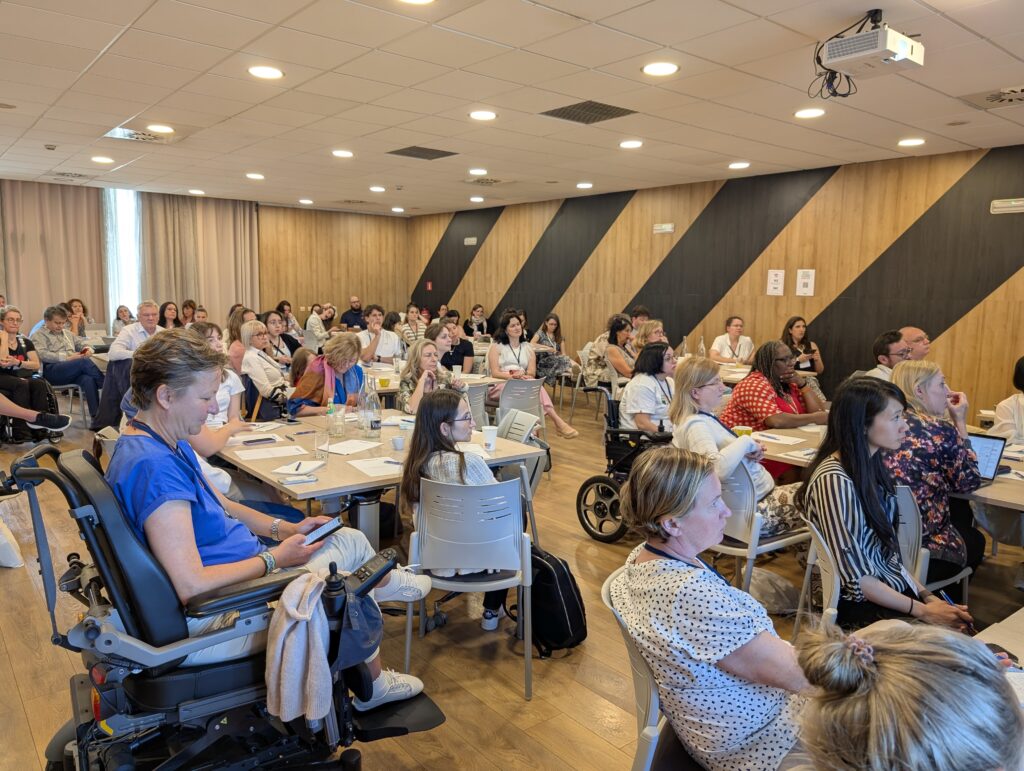
This year’s edition follows the first Open Academy Schools delivered under the ERDERA partnership, held in Barcelona in June 2025, which brought together 77 patient advocates and early-career researchers from 27 countries for practical learning and exchange.
Training across research, medicines development and patient engagement
The 2026 in-person Schools bring together two learning tracks: the School on Medicines Research & Development and the School on Scientific Innovation & Translational Research. Participants will move between School-specific sessions and joint sessions focused on patient engagement and leadership, with the programme designed as a blended learning experience that includes e-learning courses, webinars and face-to-face training.
The programme is expected to include opportunities for contact with faculty and EURORDIS staff, structured exchange among participants, and an off-site visit to the National Centre of Genomic Analysis and the Sant Joan de Déu children’s Hospital.
What this means for patients and research communities
Rare disease research often depends on collaboration across small patient populations, specialised clinical expertise and distributed research teams. For patients and families, meaningful involvement can help ensure that research questions, trial designs and evidence generation reflect lived experience as well as scientific and regulatory requirements.
The Open Academy x ERDERA Schools support that role by giving patient advocates rare disease-specific training and by creating shared learning spaces with researchers.
Open Academy alumni have gone on to participate in or set up disease-specific Community Advisory Boards, co-design or jointly submit research proposals, and contribute as patient experts in European Medicines Agency activities, including areas relevant to patients and carers.
The next call for applications (for the 2027 edition) will open on September 1st 2026 here.