

Working with European Reference Networks (ERNs)
European Reference Networks (ERNs) bring together specialised healthcare centres across Europe to address complex and rare diseases.
Aligning with ERNs means working towards shared priorities, coordinated strategies and stronger connections between research and care. This helps ensure that research insights reach clinical practice — and that clinical needs inform research, connecting research with real-life patient care.
- Sharing research insights and opportunities with ERNs
- Enabling ERNs to feed needs and priorities back into research planning
- Supporting links to data sharing, clinical research coordination and training activities
List of Networks
You might also be interested in
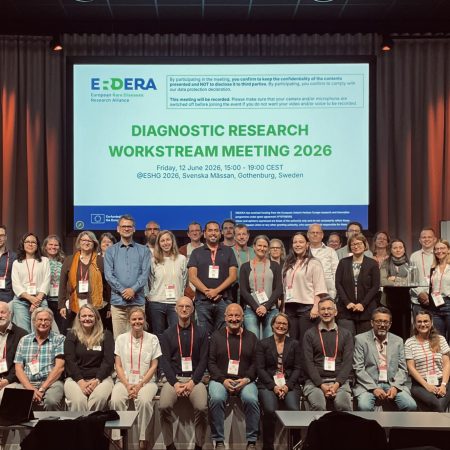
At ESHG 2026 in Gothenburg, ERDERA’s diagnostics work reviewed early progress and the next phase ahead
At the European Human Genetics Conference 2026 in Gothenburg, ERDERA’s Diagnostic Research Workstream reviewed progress, highlighted early results and used a major European genetics meeting to examine how advances in data sharing and genomic analysis may strengthen rare disease diagnosis across countries.
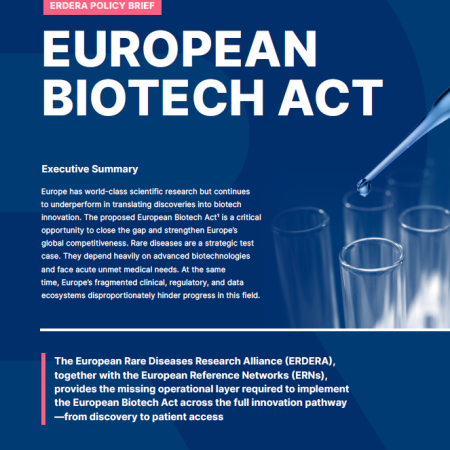
ERDERA Policy Brief: European Biotech Act
The European Rare Diseases Research Alliance (ERDERA), together with the European Reference Networks (ERNs), provides the missing operational layer required to implement the European Biotech Act across the full innovation pathway —from discovery to patient access.