
What are NMGs?
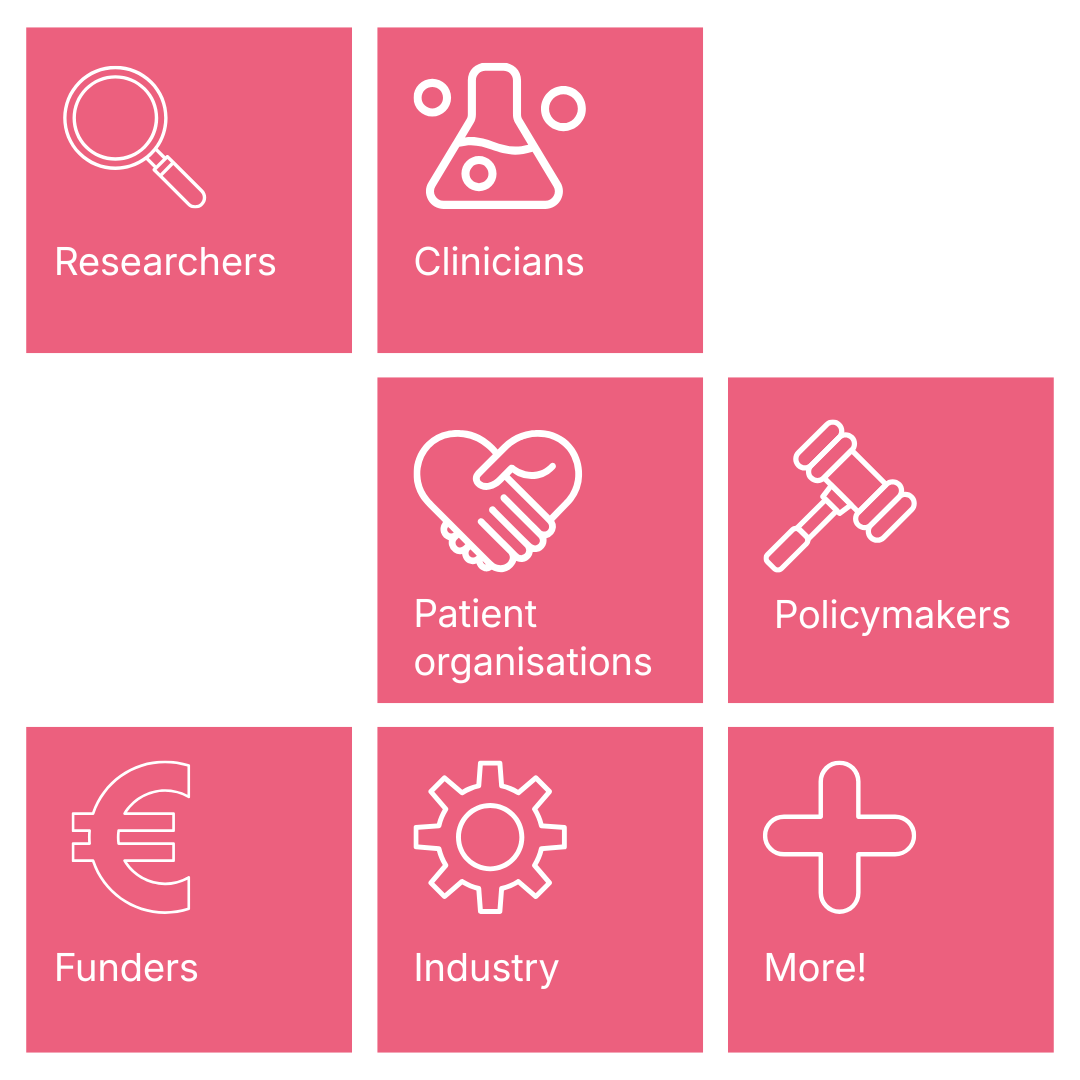
National Mirror Groups (NMGs) are national networks bringing together key people and organisations involved in rare diseases — including patients and patient organisations, clinicians, researchers, funders, and national authorities.
They are central to ERDERA’s national-international alignment work, helping to connect national activity with research and knowledge at European and global levels.
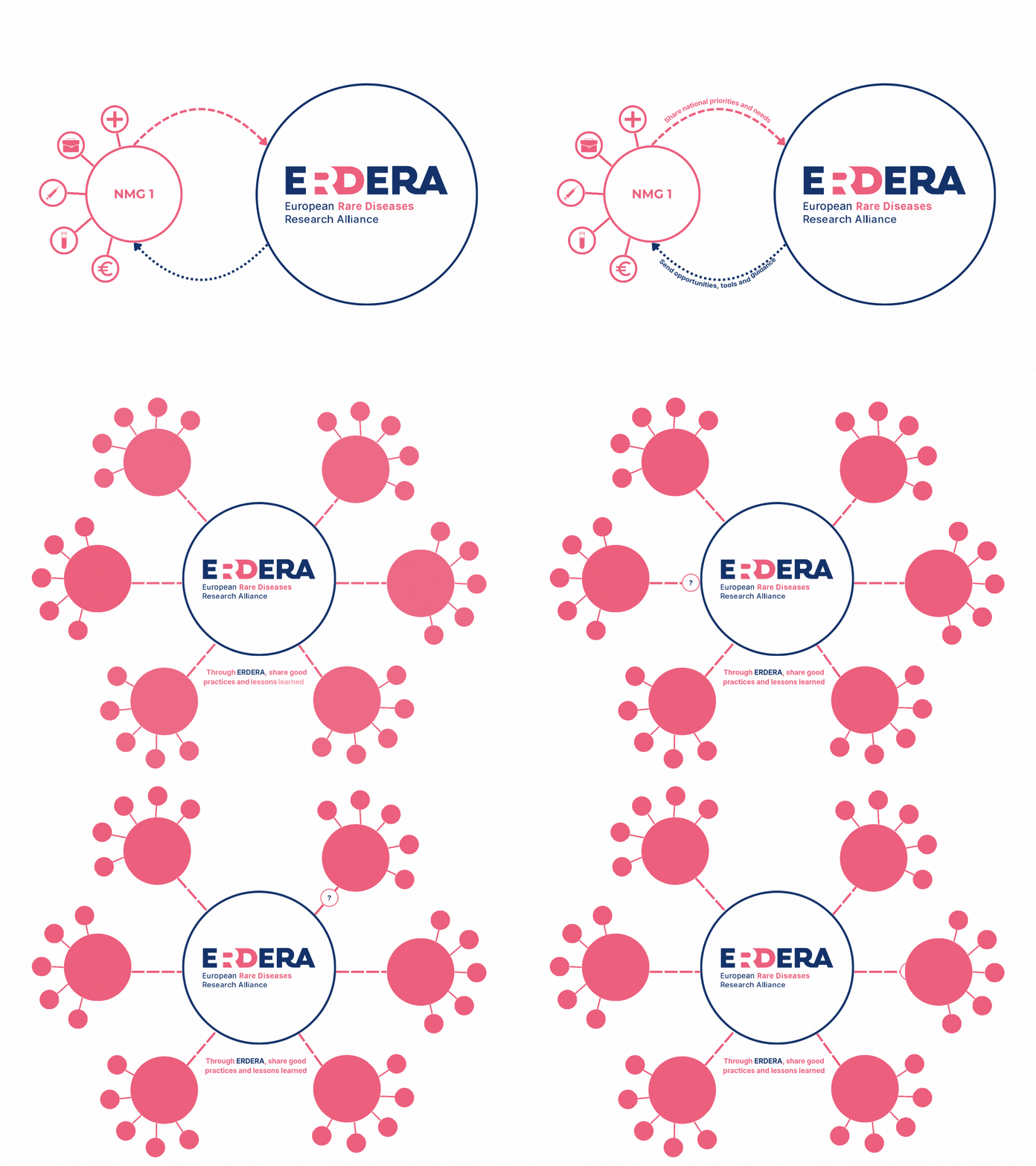
NMGs play a two-fold role:
- Strengthen and coordinate the national rare disease community, building on existing structures where these exist or creating new ones where needed.
- Driving two-way engagement between national communities and large international initiatives — most notably ERDERA — and with wider cross‑disease or pan‑European collaborations.
Objectives of the NMGs
Why does having a NMG matter?
National Mirror Groups (NMGs) facilitate the integration of national priorities and best practices into ERDERA’s annual work plans. They disseminate ERDERA’s findings, tools, and opportunities within their respective countries, while fostering peer-to-peer collaboration and practical knowledge exchange across countries. NMGs can foster stronger collaborations between particular countries or groups of countries, depending on size, geography, or other commonalities.
For people living with rare diseases, this alignment is highly beneficial: it minimises redundancy, streamlines participation in international studies and clinical trials, and enables research outcomes, tools, and funding to reach a broader range of countries, including those with emerging research and policy frameworks for rare diseases.
We aim to set up a National Mirror Group in every country involved in ERDERA. Check if your country has one already.
Want to learn more?
Visit our dedicated page about National Mirror Groups, where you will find updates, essential details, contact information, and much more!