

In July 2025, ERDERA, the European Rare Disease Research Alliance, launched a survey to identify where the rare disease research community most needs external consultancy support. The aim is to help shape an on-demand ERDERA Consultancy Service for the wider rare disease research ecosystem, including stakeholders beyond ERDERA itself.
So far, 238 responses have been received, with 84% of respondents indicating interest in such a service and 63% saying they would be willing to pay if the conditions are reasonable.
Why this matters for research and patients
The preliminary results already offer useful direction, but the current dataset does not yet reflect the full breadth of the community. Several countries are still not represented, including some participating in the ERDERA partnership, such as Australia, Iceland, Israel, New Zealand, Norway, Romania, Switzerland.
Some stakeholder profiles also remain underrepresented — including patient advocacy organisations, non-profit research organisations, companies, funding organisations and research infrastructures — while governmental organisations, health technology assessment bodies, payers and regulatory authorities have not yet been represented.
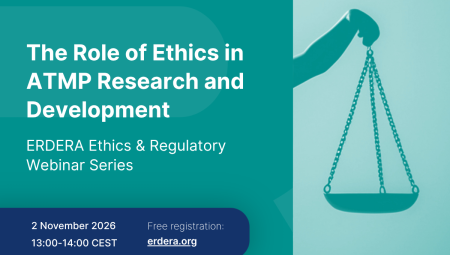
The planned service is intended to provide tailored support in areas such as ethics and regulations, clinical studies, data quality and governance, and patient and public involvement and engagement (PPIE).
For researchers, institutions and patient communities, that could help strengthen study design, improve the quality and reliability of evidence, and support more consistent governance across projects. In practice, this matters because better-designed and better-supported research is more likely to translate into meaningful progress for people living with a rare disease and their families.
What happens next
ERDERA is now inviting further responses, especially from underrepresented countries and stakeholder groups, to improve the robustness and representativeness of the analysis.
A broader evidence base will help ensure that the future consultancy offer responds to the most pressing needs across the rare disease research landscape. Readers who would like to contribute can do so through the survey link provided here.