Your Tag: Patient Public Involvement and Engagement (PPIE)

Established in 2012, the EURORDIS Black Pearl Awards recognise contributions across the rare disease community. The programme will return to Brussels and online on 15 February 2027.
EURORDIS’ European Blueprint proposes 18 priority actions across six areas, offering a community-led foundation for a future EU Action Plan on Rare Diseases.
An International Rare Diseases Research Consortium (IRDiRC) working group developed practical guidance and a checklist for involving young people meaningfully in rare disease research.
ERDERA launches Clinical Trial Call 2026 to advance early‑phase clinical trials for rare diseases
Sweden has adopted its first national strategy for rare health conditions, aiming to improve coordination, equity and access to care between 2026 and 2030.
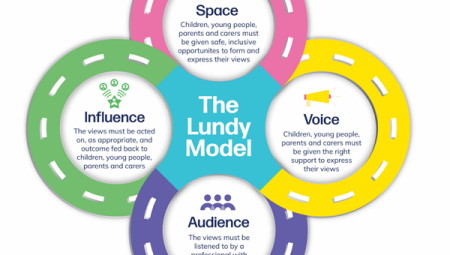
Children, Young People and Family Involvement and Engagement Strategy 2024-2029
Public involvement positively shapes research. By sharing their time and personal experiences with researchers, members of the public can influence what research takes place, how it’s carried out, and how the results are shared.
As public involvement in the design, conduct and dissemination of health research has become an expected norm and firmly enshrined in policy, interest in measuring its impact has also grown. Despite a drive to assess the impact of public involvement, and a growing body of studies attempting to do just this, a number of questions have been largely ignored.
Public involvement in research has evolved over the last two decades in a culture dominated by the principles of evidence-based medicine.
The impacts of involvement in research are often described in terms of the difference made to the research, the people involved and less frequently the researchers.