An actual picture of rare diseases in EU
Around 36 million people in the EU live with a rare disease (about 8 % of the EU population).
Approximately 6000 to 8000 rare diseases have been identified, fewer than 1000 diseases benefit from an even minimal level of scientific knowledge.
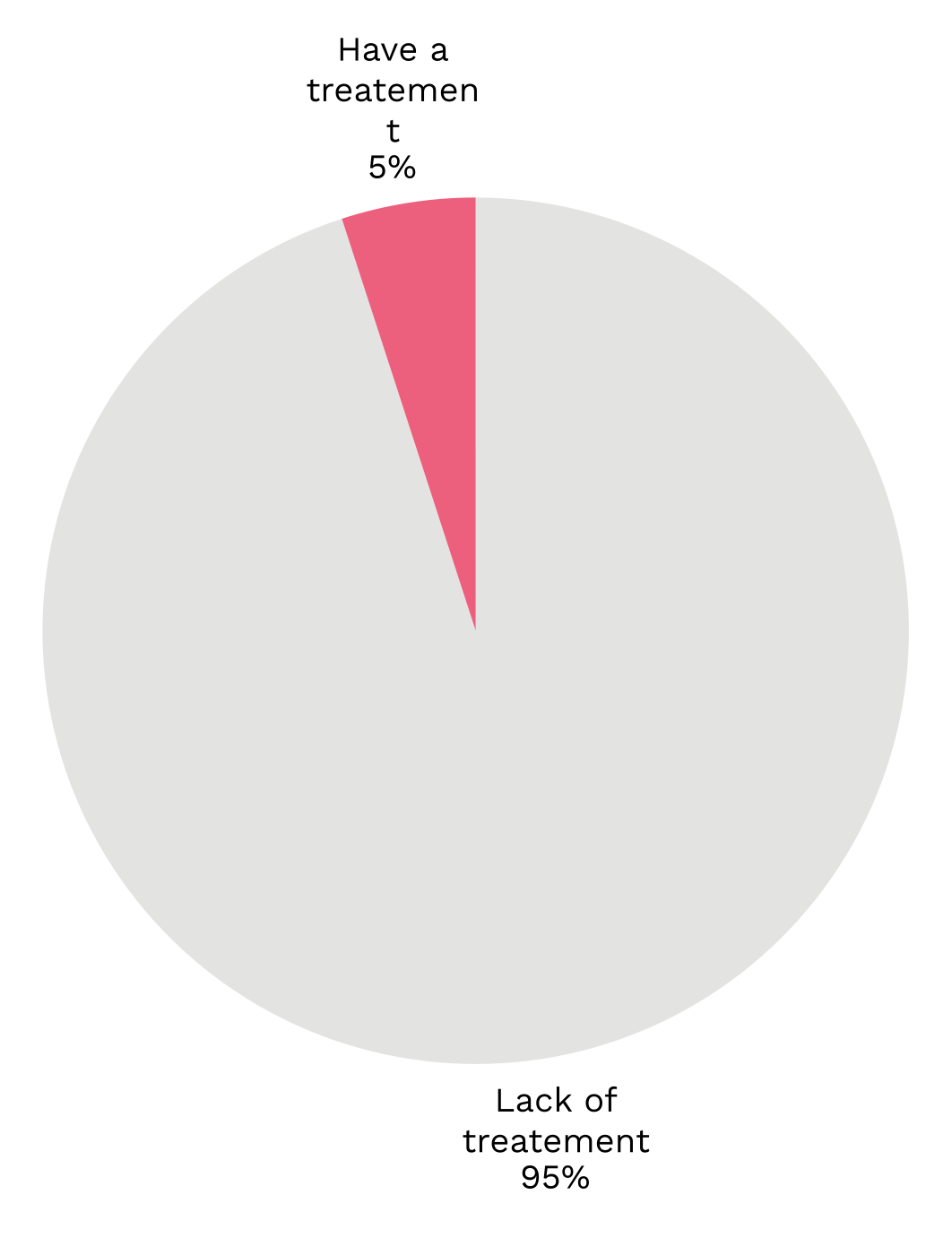
Despite scientific advances, about 95 % of the known rare diseases still lack approved treatment.
Diagnostic odyssey
In Europe, receiving a diagnosis for a rare disease takes four to five years on average. During this time, many people face uncertainty, repeated medical appointments and, in some cases, misdiagnosis.
Several factors contribute to this diagnostic odyssey:
Rare diseases are uncommon
Rare diseases are uncommon. Most healthcare professionals will see very few cases of a certain rare disease during their careers, making these conditions harder to recognise.
Knowledge and expertise may be limited
Rare diseases are uncommon. Most healthcare professionals will see very few cases of a certain rare disease during their careers, making these conditions harder to recognise.
Symptoms are often non-specific and/or misleading
Rare diseases are uncommon. Most healthcare professionals will see very few cases of a certain rare disease during their careers, making these conditions harder to recognise.
Patients often need to see multiple specialists
Rare diseases are uncommon. Most healthcare professionals will see very few cases of a certain rare disease during their careers, making these conditions harder to recognise.
People can experience the same disease differently
Rare diseases are uncommon. Most healthcare professionals will see very few cases of a certain rare disease during their careers, making these conditions harder to recognise.
Why diagnosis matters in rare diseases?
Delays can result in:
- Unnecessary tests or procedures
- Inappropriate or delayed care
- And, in some cases, irreversible disease progression if the window for intervention is missed.
In rare diseases, time is critical. Improving how diseases are recognised is therefore essential, and phenotype plays a central role in this process.
Genotype and phenotype: what do these terms mean?
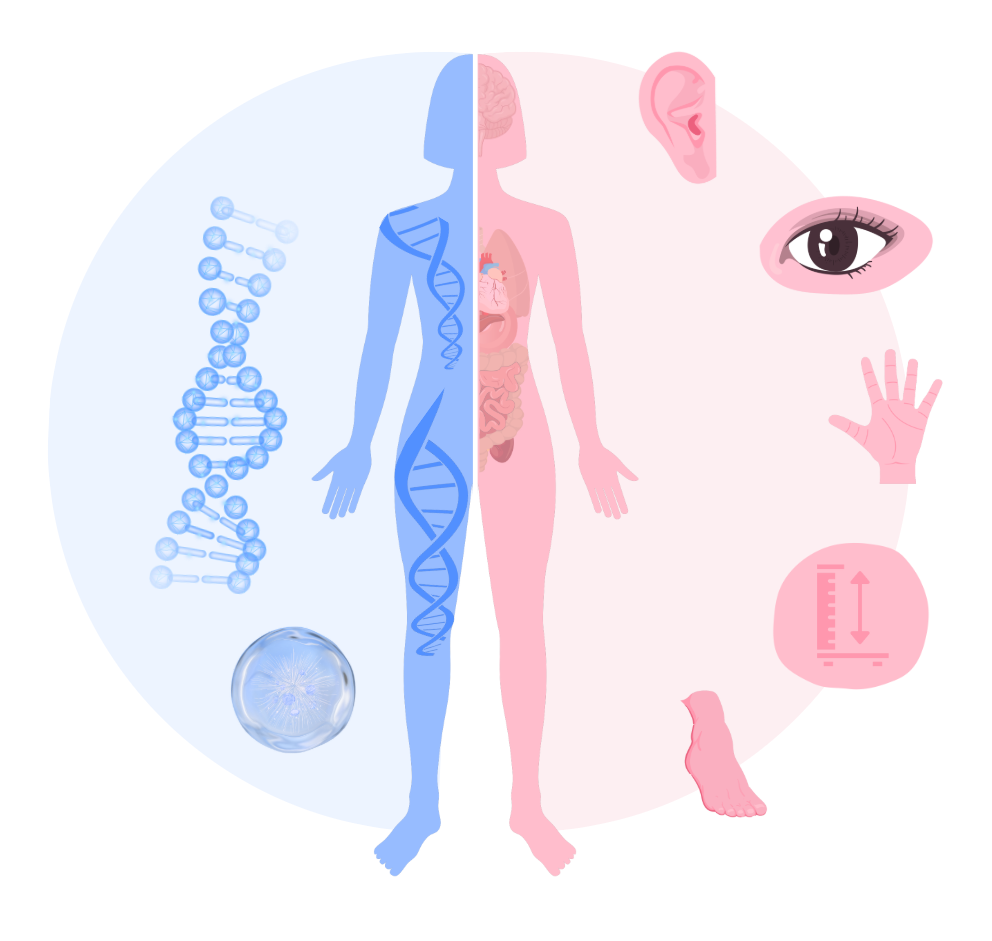
To understand phenotype-based diagnosis, it is important to distinguish between these two key concepts:
Genotype
refers to a person’s genetic information, their DNA.
Phenotype
describes the observable characteristics of an individual, including disease symptoms, physical features, and biological traits.
Both are important in the diagnostic process, but in many cases diagnosis begins with what can be observed.
What is phenotype-based diagnosis?
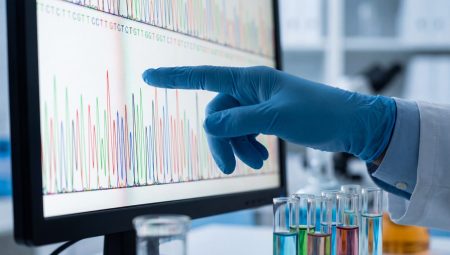
Phenotype-based diagnosis is an approach that uses a person’s observable characteristics, such as symptoms, physical features, clinical findings and results from medical examinations, to help identify a disease.
Healthcare professionals collect and analyse this information to look for patterns that match known conditions. By comparing a patient’s phenotype with the characteristic features of different diseases, including information available in clinical databases and scientific resources, clinicians can narrow down possible diagnoses and determine which additional tests may be needed.
In rare diseases, phenotype-based diagnosis is often an important part in the diagnostic process. Carefully documenting a patient’s clinical features can help clinicians recognise connections that might otherwise be overlooked and guide further investigations, including genetic testing where appropriate.
As more phenotype data are recorded using standardised terminology and shared across healthcare and research networks, it becomes easier to compare clinical cases and support diagnostic decision-making.
By following this key steps, clinicians can move from individual observations to recognising patterns that may point to a specific rare disease.
Clinical information is recorded consistently
Signs and symptoms are documented in a structured way.
Everyone speaks the same language
Standardised terms help healthcare professionals describe and share information more clearly and consistently.
Patient data can be shared across networks
Information can be stored in specialised databases, allowing experts across different countries compare cases to identify similar patients and recognise patterns.
The more consistent use of phenotypic information supports better decision-making throughout the diagnostic process. It can:
Help recognise diseases earlier
Reduce the risk of misdiagnosis
Guide genetic testing more effectively
Contribute to shortening the diagnostic journey
Collaboration and ERDERA’s role
Because each rare disease affects relatively few people in any one place, no single centre has a complete picture. Recognising patterns often depends on bringing together knowledge, expertise and patient information from across countries.
Collaboration is therefore key to improving diagnosis.
ERDERA supports this by connecting researchers, clinicians and research infrastructures across Europe, helping to align how information is collected and used. By promoting a federated and FAIR data ecosystem, ERDERA facilitates access to high-quality, comparable information while allowing data to remain securely distributed across participating organisations.
Beyond data, ERDERA strengthens diagnostic pathways by supporting shared tools, expertise and collaboration across countries.
Key takeaway
Phenotype-based diagnosis starts with what can be observed, using clinical features as clues to guide. further investigation. When these observations are structured, systematically described and shared, they can help reveal patterns that support earlier and more accurate diagnosis.