
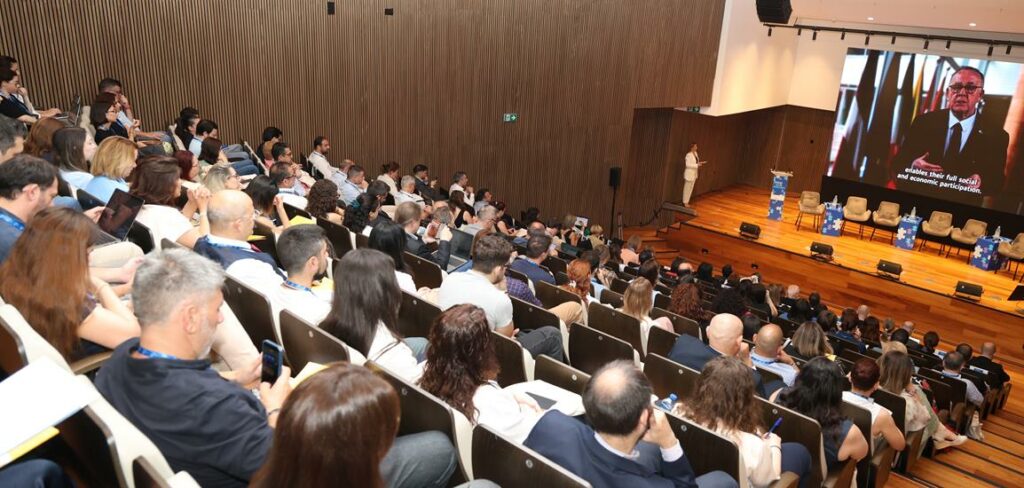
The high-level “Advancement of Treatments for Rare Diseases” conference, held on 16–17 June 2026 in Nicosia, convened stakeholders from across the European rare disease community.
Discussions explored how research, policy, regulation, data, clinical trial readiness and healthcare delivery can support the development of treatments and improve access to them.
Organised by The Cyprus Institute of Neurology & Genetics and the Deputy Ministry of Research, Innovation and Digital Policy, in the context of the Cyprus Presidency of the Council of the European Union, the event addressed a central challenge: creating a more coherent route from scientific discovery to patient benefit.
From policy ambition to therapeutic development
The opening sessions situated therapeutic research within the wider European policy landscape. Speakers discussed the rare disease landscape in Cyprus, the European Commission’s commitment to research in this field, the role of its Economic and Social Committee, and the contribution of patient organisations to shaping therapy development.
The European Rare Diseases Research Alliance (ERDERA) was represented by its Scientific Coordinator, Daria Julkowska. Contributions also came from the European Commission, EURORDIS–Rare Diseases Europe, the European Reference Networks, AFM-Téléthon, regulatory experts and clinical research leaders.
Discussions covered rationally designed therapies, advanced therapy approaches, drug repurposing and academic–industry collaboration. A recurring message was that scientific progress must be matched by coordinated funding, regulatory preparedness, shared expertise, early, meaningful involvement of patients and underrepresented Member States, and clear routes towards clinical application.
Connecting research with care and access
Day two focused on clinical trial readiness and the infrastructure required to deliver therapies in healthcare systems. Sessions highlighted European support for clinical trials, biobanks, outcome measures and patient perspectives. The discussions emphasised that treatment development is inseparable from the systems that evaluate, fund, provide, and monitor therapies.
The Cyprus Institute of Neurology & Genetics (CING) brought this relationship into focus. By combining specialist care, diagnosis, research and participation in clinical studies, CING illustrates how these areas can reinforce one another.
“For people living with rare diseases, every scientific breakthrough carries hope, but hope alone is not enough,” said Leonidas Phylactou, CEO and Medical Director of the Cyprus Institute of Neurology & Genetics. “Progress depends on strong partnerships between researchers, clinicians, policymakers, industry and patient communities. This conference reaffirmed that only through sustained European collaboration can we accelerate the development of innovative therapies and ensure that scientific advances translate into tangible improvements in the lives of patients and their families.”
This integrated perspective moves the discussion beyond individual breakthroughs and towards the sustained capacity needed to translate them into clinical impact. It also shows why collaboration between clinical centres, research infrastructures, policymakers and patient communities is essential, particularly for small and geographically dispersed rare disease populations.
ERDERA’s participation also included Holm Graessner, co-lead of ERDERA’s Clinical Research Network, and Anton Ussi, co-lead of ERDERA’s Acceleration Hub. They contributed to discussions on rational therapy development and sustainable drug repurposing.
Maintaining momentum at the European level
Held in the context of the Cyprus Presidency of the EU, the event framed therapeutic progress as dependent on regulatory preparedness, data integration, clinical readiness , equity and access development — areas that are often handled through separate policy processes.
The breadth of the conference — spanning public authorities, clinicians, researchers, industry, patient advocates, data specialists, health economists and funding bodies — underscored a fundamental feature of rare disease research: no single actor can close the gap between discovery and accessible treatment alone.
“What I took from Cyprus is that European coordination only matters if it changes what happens after the conference room: how projects are supported, how evidence is built, how trials become feasible, and how patients can ultimately benefit from the research they help make possible,” said Daria Julkowska, ERDERA Scientific Coordinator.
“ERDERA has a responsibility to help connect these pieces. If Europe wants rare disease research to deliver on its promise, we need to stay close to the funded projects, to the clinical and patient communities, and to the systems that can turn knowledge into treatments. That is where coordinated action becomes real value.”
Photos © cy2026rarediseases.com