National Action Plan for Rare Diseases in Austria

1:1
Austria’s national strategy defining priority areas and concrete measures to improve care, research, and access to services for people living with rare diseases.

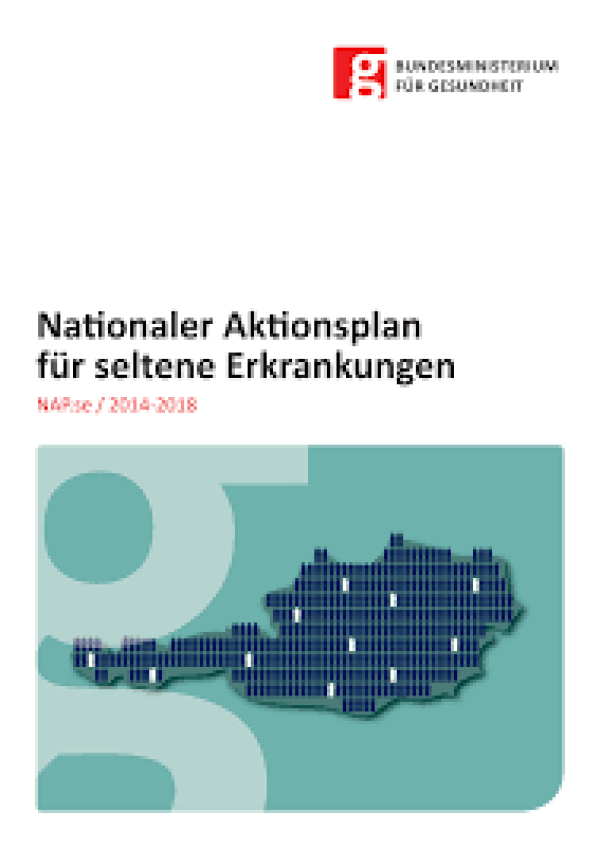
This publication presents Austria’s National Action Plan for Rare Diseases (NAP.se), developed on behalf of the Federal Ministry of Health. It defines nine strategic action areas covering governance, diagnosis, clinical care, research, information systems, patient involvement, and access to therapies, including objectives, proposed measures, responsible stakeholders, and indicative timelines. The publication is available in German only.


Year of publication

2015

ISBN

978-3-85010-538-5

Source

Federal Ministry of Labour, Social Affairs, Health and Consumer Protection (Austria), Austrian Public Health Institute (Gesundheit Österreich GmbH – GÖG), National Coordination Centre for Rare Diseases (NKSE)

Author

Florian Bachner; Margit Gombocz; Claudia Habl; Joy Ladurner; Christine Leopold; Ursula Unterberger; Till Voigtländer

You might also be interested in

The 2nd International Conference on Clinical Research Networks (CRNs), organised by European Rare Diseases Research Alliance (ERDERA), Rare Disease International (RDI) and International Rare Diseases Research Consortium (IRDiRC), brought together the global rare disease community to advance innovative clinical research solutions, with a special focus on low- and middle-income countries (LMICs).
On 3–4 June, EURORDIS–Rare Diseases Europe and Orphanet convened the rare disease community at ECRD 2026 in Prague around a shared call for coordinated European action, including the forthcoming European Blueprint for Rare Diseases.
The European Rare Diseases Research Alliance (ERDERA), together with the European Reference Networks (ERNs), provides the missing operational layer required to implement the European Biotech Act across the full innovation pathway —from discovery to patient access.
ERDERA will launch its Clinical Trial Call 2026 (ECTC) on 1 July 2026, supporting multinational, GCP‑compliant early‑phase interventional clinical trials in rare diseases.