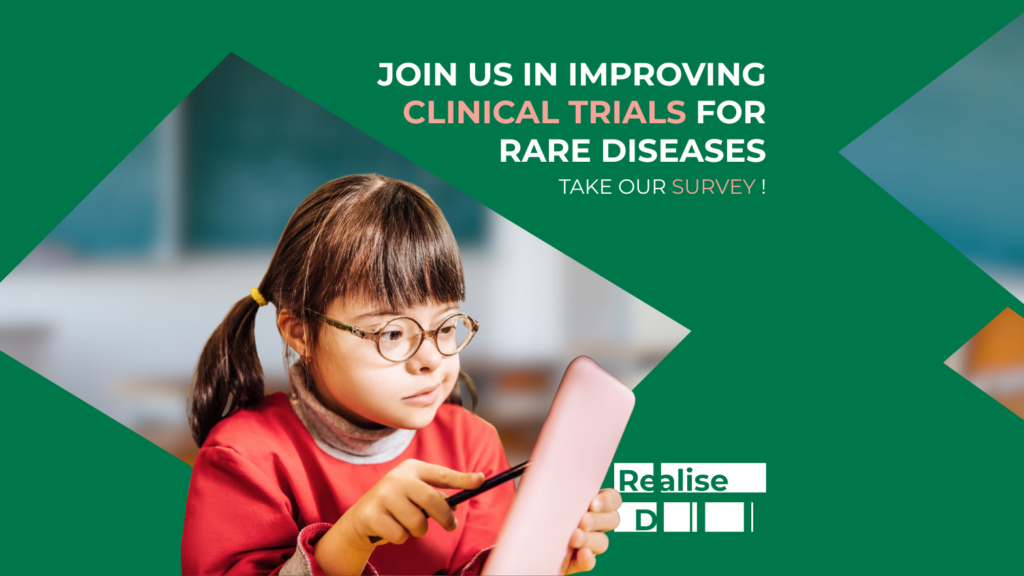
The RealiseD project launched a new multi-stakeholder survey that invites the rare disease community to share insights and help improve clinical trial enrolment

New survey launched to improve rare diseases clinical trial enrolment

blank
Clinical trials are essential to advancing new therapies; however, recruiting participants for rare and ultrarare conditions remains a significant challenge. TheRealiseD project is launchinga survey that seeks to identify and understand the factors that influence enrolment in rare disease clinical trials. This consultation invites health care professionals, academia,industry representatives, regulators, trial sponsors and patient advocates to share their perspective on barriers and opportunities and contribute to shaping a more inclusive and efficient future for rare disease research.The online survey, which can be accessed through this link, is divided into three sections:

  • The first explores trial site and structural factors, looking at logistics, staffing, and data-sharing tools that impact accessibility.
  • The second focuses on trial design and operational factors, including aspects such as trial location, duration, and participant experience.
  • The third section delves into patient-level and disease factors, examining how age, treatment options, and disease severity influence participation.

All responses are strictly anonymous, and only aggregated data will be shared—individual answers will never be disclosed. Insights from multiple stakeholders will help us understand the structural, operational, and patient-level factors that impact enrolment and create solutions that make trials more inclusive, patient-centric and effective. By participating, respondents can play a vital part in advancing enrolment strategies for rare and ultra-rare disease trials worldwide.

This consultation process will close on 28 January 2026.
About RealiseD

RealiseD (compRehensive mEthodological and operational Approach to cLinical trIalS in ultra rarE Diseases) is an Innovative Health Initiative (IHI) project focused on developing and supporting methodological and operational approaches for clinical trials in rare and ultra‑rare diseases, including the design, analysis and interpretation of data from very small patient populations. An overview of the project’s scope is available via the IHI project factsheet for RealiseD.
ERDERA (the European Rare Diseases Research Alliance) works to strengthen rare disease research across Europe, including through its Clinical Research Network and a strong focus on meaningful patient engagement (Patient and Public Involvement and Engagement (PPIE)). RealiseD’s work aligns with these themes and, according to the IHI project factsheet, RealiseD’s tools and systems are intended to be tested and initiated within ERDERA.

News & Updates

You might also be interested in

On 3–4 June, EURORDIS–Rare Diseases Europe and Orphanet convened the rare disease community at ECRD 2026 in Prague around a shared call for coordinated European action, including the forthcoming European Blueprint for Rare Diseases.
The European Rare Diseases Research Alliance (ERDERA), together with the European Reference Networks (ERNs), provides the missing operational layer required to implement the European Biotech Act across the full innovation pathway —from discovery to patient access.
ERDERA will launch its Clinical Trial Call 2026 (ECTC) on 1 July 2026, supporting multinational, GCP‑compliant early‑phase interventional clinical trials in rare diseases.
Pre-announcement describing scope, eligibility and indicative timeline for the ERDERA Clinical Trial Call 2026, expected to open on 1 July 2026.