
In early February, at an Undiagnosed Hackathon in Hyderabad, India, the bell rang seven times over two days — each ring marking a long-awaited diagnosis for a family that had already been through whole genome or exome sequencing and was still without answers.
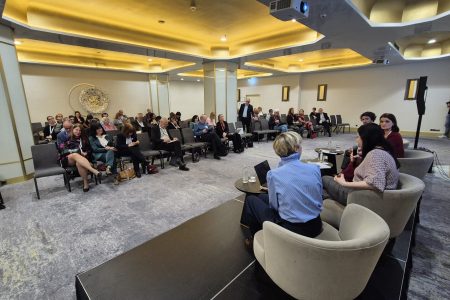
The Hyderabad event brought together concentrated expertise — clinicians, bioinformaticians, molecular biologists, researchers, AI specialists and others — working side by side to tackle complex cases for people living with undiagnosed conditions. For families facing years of uncertainty, this model can create a different kind of progress: shared reasoning around the available evidence, setting collaborative approaches towards an answer.
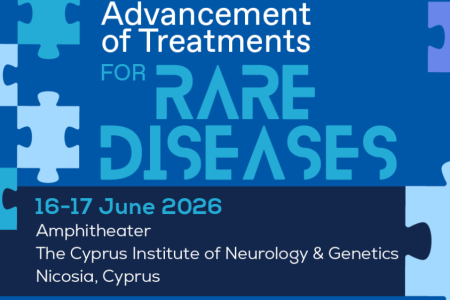
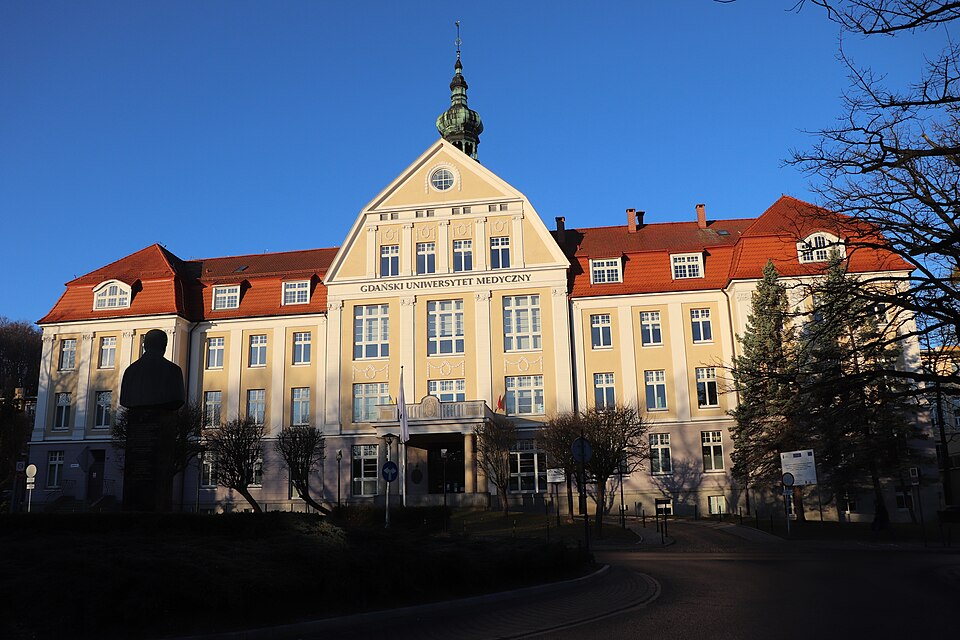
In late April, this momentum comes to Europe. On 29–30 April in Gdansk, Poland, ERDERA will join the Wilhelm Foundation, the University Clinical Centre (UCK) and the Medical University of Gdansk (GUMed) to co-organise Where Diagnosis Becomes Hope: The Power of Collaboration and Technology in Rare Diseases, a two-day, clinician-led diagnostic meeting focused on phenotype-led practice and live case discussion.
The Gdansk meeting draws on the same collaborative spirit as the Undiagnosed Hackathons, but it is not a hackathon. Rather than a data-intensive format centred on genetic datasets during the event, the event in Poland will be designed around specialist clinical assessment, shared phenotyping and multidisciplinary discussion with patients and families present.
The meeting will open on 29 April — International Undiagnosed Day — with a closed phenotyping round table: a multidisciplinary case-analysis workshop for ten patients with families present. An open, in-person symposium hosted at UCK will follow on 30 April, with national and international experts will coming together. More details and registration for the open session are available here.
Poland is one of ERDERA’s Underrepresented Countries (UCs), a designation that recognises nations where targeted support to rare disease research capacity and coordination can accelerate progress.
“This is a great opportunity for Poland to bring forward the topic of undiagnosed diseases and the regulation around that,” said Maja Bartoszewicz-Moritz, Coordinator of Rare Disease Center Patient Council at GUMed. “It is a very important day for us in the whole process of creating a National Mirror Group in our country, bringing together fantastic experts from our own nation and abroad to move forward with collaboration.”
What makes the model different for families and teams
Events such as these aim to bring together clinical context, genetic information and specialist expertise in a way that supports shared decisions.
In Hyderabad, for example, the team worked with applicants who had already completed whole genome or whole exome sequencing and remained undiagnosed, and the organisers added additional techniques such as long-read sequencing and RNA analysis to help unlock complex cases.
“The event focuses on families, although they are not present in the rooms most of the time. They usually spend only short periods in the specialist rooms. However, the specialist can visit the families if they would like to speak with them in more detail or assess an undiagnosed child or adult,” explains Helene Cederroth, founder of the Wilhelm Foundation and champion of Undiagnosed Hackathons worldwide. “During the event, families can also take part of music therapy, drawing, and play. They also have the opportunity to talk with other families, as this is often the first time a family meets another family in the same situation.”
That intensity also brings complexity. Aligning expertise across specialties and countries, managing uncertainty responsibly, and ensuring that families are protected — ethically and practically — takes careful planning.
Vicente Yépez, co-founder of Omics Discoveries GmbH and ERDERA collaborator, attended the Hyderabad event as an expert. “The goal of having the families present is that the clinicians can observe and ask questions beyond what was in the clinical report”, he notes. “There might be a doctor who has observed, read or heard of that clinical presentation. In addition, seeing the families — the parents, children, and siblings — becomes a source of inspiration and motivation for the all the participants.”
What’s to happen in Gdansk
The Gdansk meeting will run across two days and will be centred on specialist clinical assessment, shared phenotyping, and collaborative diagnostic discussion.
Day one will take the form of a multidisciplinary case-analysis workshop focused on phenotyping — the detailed description of a person’s clinical features that often determines whether the right diagnostic hypothesis is even considered.
“The case‑based programme will draw on four case studies: two where a diagnosis was reached after a long diagnostic odyssey, and two that remain undiagnosed,” explains Dave Pearce, Chair of the International Rare Diseases Research Consortium (IRDiRC). “Placing solved and unsolved cases side by side reflects that diagnosed and undiagnosed people sit on a continuum rather than in separate groups, and it helps show what changes when a diagnosis is finally reached.”
Day two will broaden into an open symposium convened by the Gdansk team. It will open with senior representatives from the University Clinical Centre in Gdansk (UCK), the Medical University of Gdansk (GUMed) and the Centre for Rare Diseases in Gdansk, followed by thematic sessions on modern diagnostics in undiagnosed conditions, and case-based learning from both solved and unsolved journeys. More information and registration details can be accessed here.
The programme will also include dedicated discussion on what to do when there is no diagnosis — including coordinated care, ethics, privacy and data governance — alongside a session on international cooperation and registers, linking national practice with cross-border collaboration and shared infrastructures.
“Our aim is not only to discuss difficult cases, but to strengthen the systems that surround them,” said Tomasz Grybek of the Medical University of Gdańsk. “This means shared approaches to phenotyping, closer integration between coordinated clinical care and research infrastructure, and follow-up that remains centred on families.
Building the infrastructure for future diagnosis
Looking beyond April, an upcoming Undiagnosed Hackathon is planned for 17–20 September 2026 in Singapore, with a phenotyping course and tools workshop preceding the main event.
“Undiagnosed conditions sit at the boundary between research and clinical care,” said Daria Julkowska, ERDERA Scientific Coordinator. “What matters is bringing the right expertise together — clinicians and geneticists working side by side, sharing methods, building capacity, and keeping patient benefit as the organising principle. That is why ERDERA is involved.”
More details and registration for the open session on 30 april here.
Photo: Andrzej Otrębski, CC BY-SA 4.0