
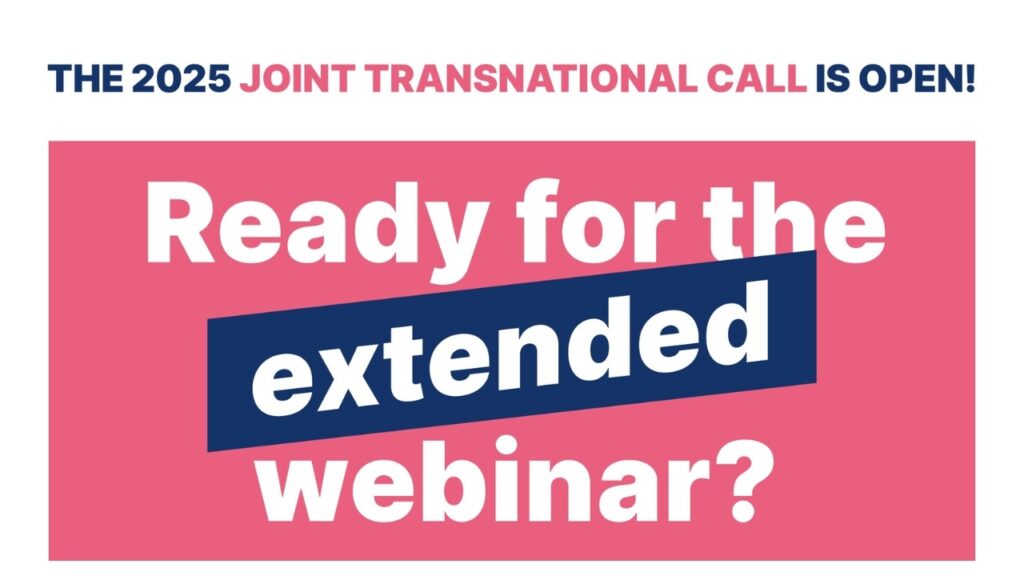
Following the success of our previous session, ERDERA warmly invites researchers, patient advocates, and early-career professionals to an extended webinar on 14 January 2025. This webinar is part of the 2025 Joint Transnational Call for Proposals, “Pre-clinical therapy studies for rare diseases using small molecules and biologicals – development and validation”, which was officially launched on 10 December 2024.
Click here to register for the webinar.
This Webinar will:
- Inform applicants about lessons learned about the evaluation.
- Guide applicants with key translational, regulatory, data managing, and methodological considerations for drafting strong pre-proposals.
- Address your questions through dedicated Q&A sessions.
Agenda (CET)
- 14.00-14.10 Introduction (Ralph Schuster)
- 14.10-14.20 Lessons learned from previous calls – evaluators perspective
(Christine Kinnon) - 14.20-14.30 Q&A Round 1
- 14.30-14.45 Innovating Management Toolbox (IMT) and Mentoring service (Agustin Arasanz Duque, Rosan Kreeftmeijer-Vegter, Toni Andreu)
- 14.45-15.00 Regulatory Support Service (Viviana Giannuzzi, David Morrow)
- 15.00-15.10 Q&A Round 2
- 15.10-15.25 Methodological Support (Rima Nabbout)
- 15.25-15.40 Data standards and FAIRification (Marco Roos)
- 15.40-15.50 Q&A Round 3
- 15.50-16.00 Closing remarks
Registration is mandatory
- The registration deadline is 14 January 2025.
- Upon submitting your registration, you will receive connection links and calendar invitations to ensure seamless participation.
Note: The webinar will be recorded, and the video recording will be made available exclusively to registered participants.
Don’t miss this chance to get ahead in the application process and ensure that your project stands out!
Find out more details about ERDERA’s Joint Transnational Call 2025 – Announcement here.