
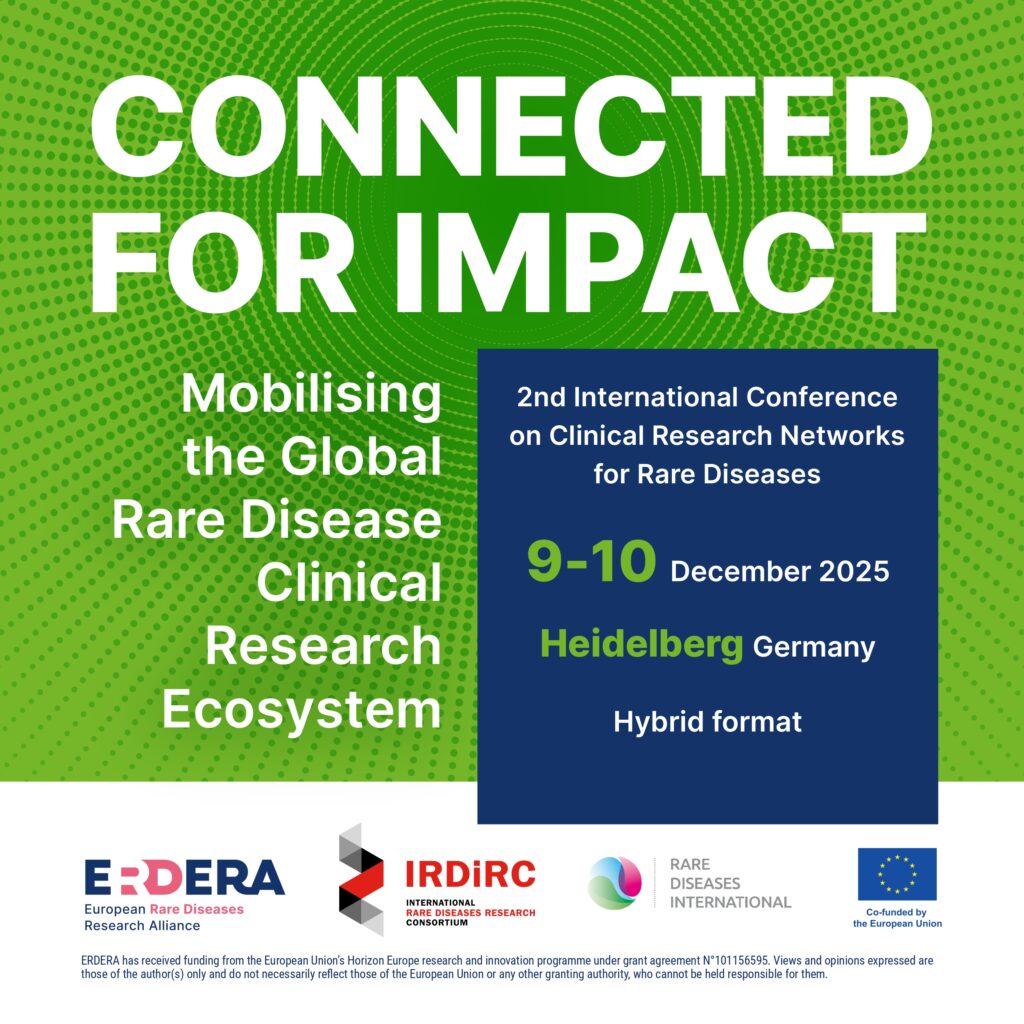
ERDERA – the European Rare Diseases Research Alliance – is pleased to announce the upcoming 2nd International Conference on Clinical Research Networks (CRNs) for Rare Diseases, co-organised in collaboration with Rare Disease International and the International Rare Diseases Research Consortium (IRDiRC).
The conference will take place on 9–10 December 2025, in a hybrid format, welcoming both in-person and virtual participants from across the globe. As in-person places are limited, online participation is strongly encouraged.
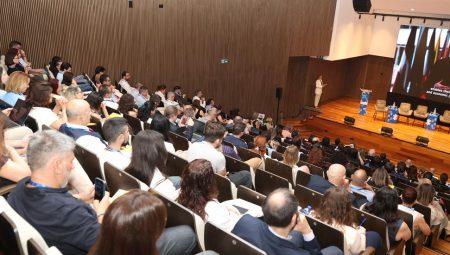
Building on the success of the inaugural edition in 2022—organised by ERDERA’s predecessor, EJPRD, alongside IRDiRC—this second edition will once again convene a wide range of international experts, including researchers, clinicians, patient advocates, industry representatives, policymakers, and funders to strengthen the collaborative ecosystem that underpins clinical research in rare diseases worldwide.
What are Clinical Research Networks – and why do they matter?
Clinical Research Networks are structured collaborations of expert clinical sites, laboratories, patient organisations and other stakeholders that join forces to accelerate prevention, diagnosis, epidemiological studies, natural-history studies and clinical trials for rare and groups of rare diseases.
By pooling scarce patient populations, harmonising protocols and sharing high-quality data, CRNs overcome the fragmentation that has long slowed progress in the field. Key themes on the agenda include:
- Global efforts to advance Real World Evidence (RWE) and data collection
- Emerging technologies in diagnostics, prevention & clinical research
- Lessons learned from Low- and Middle-Income Countries (LMICs)
- Medical Devices in trials for QoL, movements, evaluation
- Strategies for effective multi-stakeholder engagement
- The critical role of patients and partnerships in enabling international research access
- Models of care and global research networks across income settings
As the rare disease community operates across borders, the need for inclusive, coordinated, and sustainable research networks is more pressing than ever. This conference provides a unique platform to explore solutions that have a global impact yet are locally actionable.
Whether you conduct research, influence policy, or represent a patient’s voice, this event foresees two days of rich discussions, practical knowledge exchange, and meaningful connections. By sharing best practices, its aim is to foster mutual understanding of Clinical Research Networks (CRNs), strengthen its resources, and identify concrete pathways to enhance collaboration and interoperability worldwide.
Event details
Date: 9–10 December 2025
Format: Hybrid – online and in-person participation available
Registration: here.
Further information: Programme details, speakers, and registration will be announced shortly.