
Rare Disease Day 2026 · Media Kit
28 February 2026
Rare Disease Day 2026 arrives at a pivotal moment for the estimated 36 million people in the European Union living with a rare condition.
This year’s focus on equity highlights the urgent need to bridge these divides — ensuring that a patient’s postcode does not determine their access to a timely diagnosis, specialist care, or life-changing clinical research.
To support media professionals in developing rigorous and impactful coverage, this page provides a suite of resources designed to translate complex research into human-centred stories.
Below, you can access our core media toolkit. We also offer direct entry points to a network of respected ERDERA voices — from lead scientists and data engineers to policy experts and patient representatives — available to provide expert commentary and lived-experience perspectives on the challenges and collaborative solutions shaping the field today. Do get in touch with us ifor assistance.
Key messages and stats
- Rare Disease Day 2026 is a call for equity, not one-size-fits-all solutions. The campaign, coordinated by EURORDIS – Rare Disease Europe and delivered through 72 national alliances, puts representation and fair access to diagnosis, care and research at the centre.
- Rare Disease Day is a moment to turn visibility into measurable commitments. ERDERA is advocating for a shared hope: diagnosis within six months for identified diseases and a future where a substantial number of therapies are approved — targets that depend on collaboration, shared evidence, and genuine patient partnership.
- Rare diseases are “rare” one by one, but not rare together. Each rare disease affects fewer than one in 2 000 people, yet rare diseases affect about 4% of the population over a lifetime and an estimated 30 million people in Europe live with a rare disease.
- The diagnostic delay is still too long — and it is not equally shared. ERDERA highlights an average of four to five years to diagnosis for known diseases, with uneven access to testing and counselling across countries.
- Most rare diseases still have no approved treatment — this is a research and access gap we can close. ERDERA notes that fewer than 5% of rare and ultra-rare conditions have an approved therapy, while EURORDIS reports 230+ orphan medicines authorised in the EU — important progress, but not yet enough.
- For many families, the burden goes far beyond symptoms. EURORDIS reports that seven in ten people living with rare diseases and family carers reduce or stop professional activity, and two-thirds of family carers spend more than two hours a day on disease-related tasks.
- ERDERA exists to turn science into benefits people can feel in care pathways. It unites 170+ organisations across 37 countries, with an estimated overall budget of €380 million to 2031 (including around €150 million from the EU via Horizon Europe) to strengthen diagnosis, prevention and treatment through coordinated, patient-driven research.
- Better data-sharing is not an abstract goal — it is how we shorten delays and widen trial access. ERDERA is building a federated, FAIR (findable, accessible, interoperable, reusable) ecosystem and linking infrastructures so that health and research data can be used responsibly for science, regulation and care.
ERDERA advances: One year into delivery
ERDERA advances its support to rare disease care — towards reducing diagnostic delay, improving treatment pathways, and widening access to research
One year into delivery under Horizon Europe, ERDERA is translating coordination into concrete calls, services and shared action to shorten diagnostic journeys and accelerate better care for people living with a rare disease.
As ERDERA enters 2026, the European Rare Diseases Research Alliance is moving from set‑up to delivery, with tangible outputs now in place for the rare disease community and clear next steps for 2026.
ERDERA is a Horizon Europe initiative, co-funded by the European Union and national and regional funders, designed to complement and reinforce national rare disease plans through practical collaboration, shared resources and clearer routes for research to inform care.
Bringing together more than 170 public and private organisations across 37 countries in Europe and beyond, ERDERA’s patient-centred mission is to strengthen rare disease research and innovation so that prevention, diagnosis and treatment improve for people living with a rare disease.
ERDERA is organised as seven integrated services — spanning Funding, Clinical Research, the Data Services Hub, Expertise services, the ERDERA Accelerator, Training and education and International alignment — with patient and public involvement and engagement (PPIE) woven throughout the partnership’s work and governance (see Structure and governance).
What follows is a short, impact oriented overview of key achievements and updates from the last year.
Funding delivering early results: first Joint Transnational Call portfolio selected (JTC 2025)
In December 2025, ERDERA announced the first funded portfolio under its Joint Transnational Calls: 18 multinational preclinical therapy projects selected from 161 initial proposals (with 48 invited to full application), with a combined budget of approximately €29 million.
The selected consortia are supported by 29 national and regional funding organisations from 23 countries and co‑funded by the European Commission.
The funded portfolio is explicitly framed around generating robust preclinical evidence to prepare future clinical trials, with the shared aim of supporting safer, more effective therapies for people living with a rare disease.
- Read the announcement: ERDERA announces first Joint Transnational Call 2025 portfolio of preclinical therapy projects for rare diseases.
- Explore ERDERA’s funding approach and active calls: Funding.
Data delivering early results: 10 000 harmonised datasets brought together for unsolved rare disease cases
In its first year, ERDERA has brought together 10 000 harmonised genomic and phenotypic datasets from unsolved rare disease cases across Europe, creating a secure, standardised and scalable resource designed to accelerate diagnostics, discovery, innovation and collaboration at international scale.
Hosted within the ERDERA Diagnostic Research environment, this resource is designed to help rare disease clinicians and researchers work more effectively across borders, with the shared aim of improving diagnosis and opening up new routes to discovery for people living with a rare disease and their families.
ERDERA has coordinated the collation of unsolved cases contributed by multiple partners across countries and institutions, alongside a standardisation pipeline that maps incoming records to common data models and ontologies so that datasets become interoperable and comparable.
Complementary quality control workflows then validate each dataset, safeguarding reliability for downstream analyses, cross-cohort queries and reproducible research.
As ERDERA Scientific Coordinator Daria Julkowska notes: “In rare diseases, individual conditions are uncommon and cohorts are small, so integration is critical. By bringing together what was previously scattered, ERDERA has built an infrastructure for answers.”
- Read more about this news here.
Funding for faster diagnosis: Joint Transnational Call 2026 launched on resolving unsolved cases
Building on JTC 2025, ERDERA launched its Joint Transnational Call 2026 on 10 December 2025: “Resolving unsolved cases in rare genetic and non‑genetic diseases”. The call welcomes proposals aimed at delivering diagnostic clarity for unsolved and clinically complex rare diseases and signals that involving patient organisations from the start is “highly desirable”.
Key dates and applicant information are published on the call page, including an information webinar held on 16 December 2025 (15:00–17:00 CET), a pre‑proposal deadline of 12 February 2026 (14:00 CET) and a full proposal deadline of 8 July 2026, with results expected in December 2026.
- Access the call text, documents and submission links: Joint Transnational Call 2026.
Clinical research moving from principles to practice: a Europe‑wide network, and a global conference roadmap
ERDERA’s Clinical Research Network is designed as a pan European ecosystem connecting European Reference Networks, national diagnostic centres and undiagnosed disease programmes to provide shared access to harmonised data, (re)analysis pipelines and trial enabling infrastructure. Its services span diagnostic research, outcome research and innovative therapies, with a focus on methods and study designs that work for small, heterogeneous patient populations.
As set out on the Clinical Research Network page, within the first year ERDERA collected and harmonised 10 000 diagnostic datasets from unsolved rare disease patients.
It also set up a joint data‑controller model and a formal data‑sharing agreement to ensure data is used securely and lawfully.
In December 2025, ERDERA co-organised the second International Conference on Clinical Research Networks (CRNs) with Rare Diseases International and IRDiRC, bringing clinicians, patient leaders, regulators and researchers together.
It moved from evidence to action on regulatory grade real-world evidence and data collection, new diagnostics and clinical research methods, medical devices in trials, lessons from low and middle-income countries, and models of care within global networks.
- Access the ERDERA Clinical Research section.
- Conference highlights article: Clinical experts and patient advocates gather in Heidelberg to turn discussion into action on global rare disease research.
- Conference highlights video: How Clinical Research Networks are transforming rare disease research.
Acceleration: connecting translational projects to development expertise and partners
To help promising science move towards patient benefit, ERDERA has established the ERDERA Accelerator, bringing together two complementary components.
On one hand, the Technology Accelerator focuses on enabling therapy technologies (including ATMP delivery technologies), while the Public–Private Collaboration Accelerator (PPCA) is positioned as an “open innovation marketplace” to support projects with development planning and connect them to external funding and investment opportunities.
The ERDERA Public–Private Collaboration Accelerator (PPCA) offers a practical support for researchers working from discovery to preclinical proof‑of‑concept, including hands‑on advice across drug discovery, preclinical development, regulatory science and market access; structured engagement with relevant stakeholders (including patient organisations and investors); and support delivered without claiming intellectual‑property ownership.
National and international alignment: National Mirror Groups expand in ERDERA’s first year
To support consistent uptake and participation across countries, ERDERA’s International alignment workstream links national communities through National Mirror Groups (NMGs) and connects European efforts with global collaboration, including hosting the IRDiRC Scientific Secretariat.
The first annual activity survey of NMGs (covering activity to August 2025) reported 15 NMGs being established by early May 2025 and completing the survey, involving approximately 234 organisations. Twelve of these 15 NMGs reported including all ERDERA beneficiaries and associated partners in‑country. By January 2026, the number of established NMGs had raised to 21.
- Learn more about the approach and its components, including under‑represented country engagement and global collaboration: International alignment.
Policy work: the ERDERA Policy Think Tank
ERDERA is establishing a Policy Think Tank as a neutral platform to convene rare disease research policy discussions and help align legislative and regulatory frameworks with research and innovation needs.
Hosted under ERDERA and linked to national and EU stakeholders, it is designed to support policy translation and collaboration across academia, industry, regulators, patient advocacy groups and policymakers, with a particular focus on the long‑term sustainability of investments into underserved rare disease areas.
Its planned way of working includes identifying opportunities, preparing a SMART policy roadmap for up to two deep dives per year, and “pressure testing” operations starting with data and registries, including questions around access pathways and pragmatic approaches to data quality and standardisation. This is intended to connect ERDERA’s practical data work with evolving EU initiatives such as implementation of the European Health Data Space.
Patient and public involvement: from principle to operating model
ERDERA’s governance and service design embed patient and public involvement and engagement as a core operating model (see Structure and governance).
In July 2025, ERDERA highlighted how this is being reflected in expectations for funded research and in the way priorities are shaped, arguing that lived experience and data stewardship should be recognised alongside laboratory science when defining what “excellent” rare disease research looks like.
Convening for shared priorities: RE(ACT) Congress & IRDiRC Conference 2025
Partnerships are not only built through calls and services; they are also built through shared agendas. ERDERA co-organised the RE(ACT) Congress & IRDiRC Conference in Brussels on 5–7 March 2025, convening scientists, patient advocates, funders and policymakers to address pressing challenges across the rare disease field.
The published recap below emphasises early diagnosis, data sharing, advanced therapies and patient relevant societal impacts, while positioning ERDERA as a mechanism to translate recommendations into coordinated actions.
Read the recap: RE(ACT) Congress and IRDiRC Conference 2025 concludes with calls for stronger collaboration on rare diseases.
Join the Social Media campaign
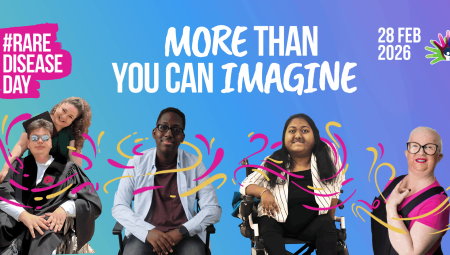
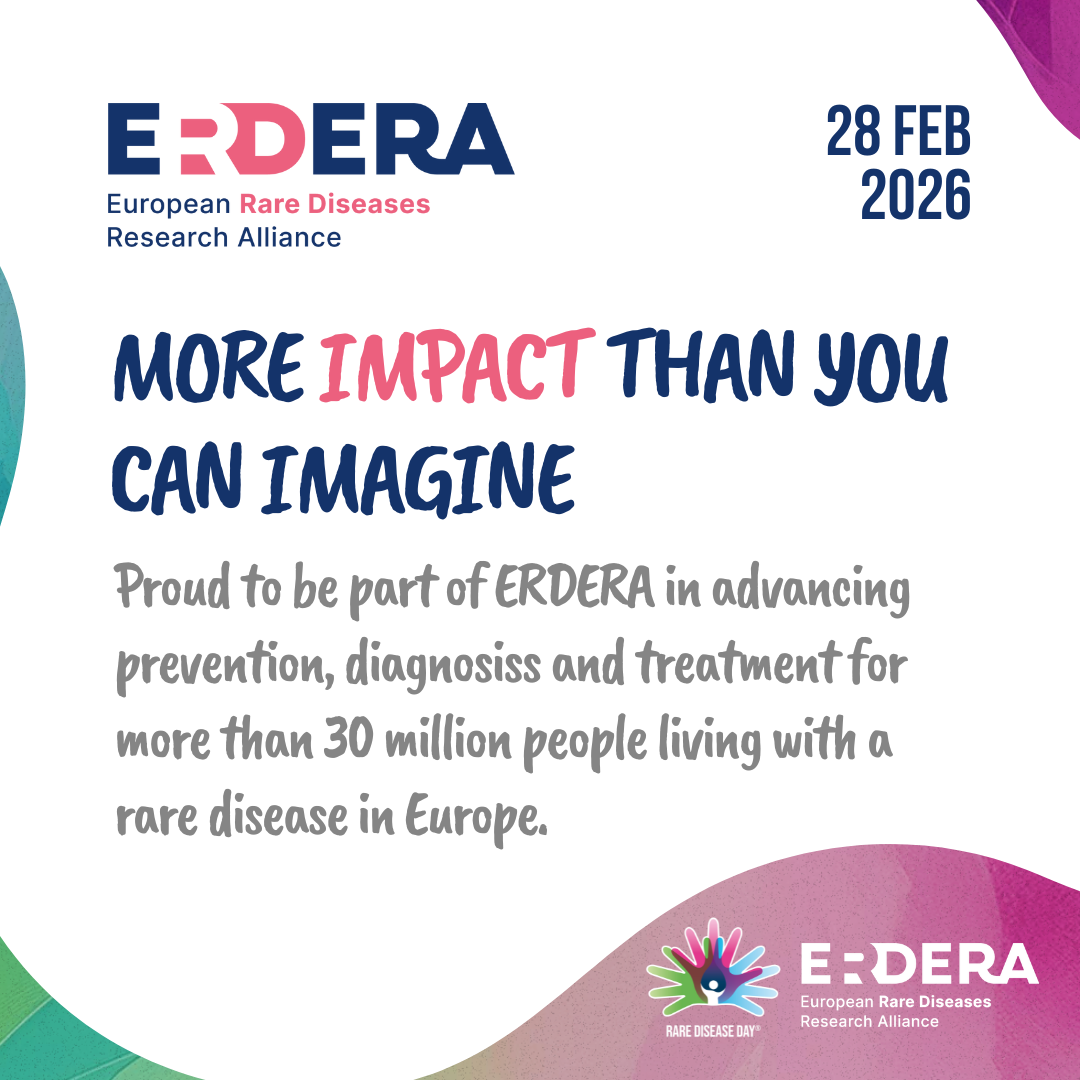
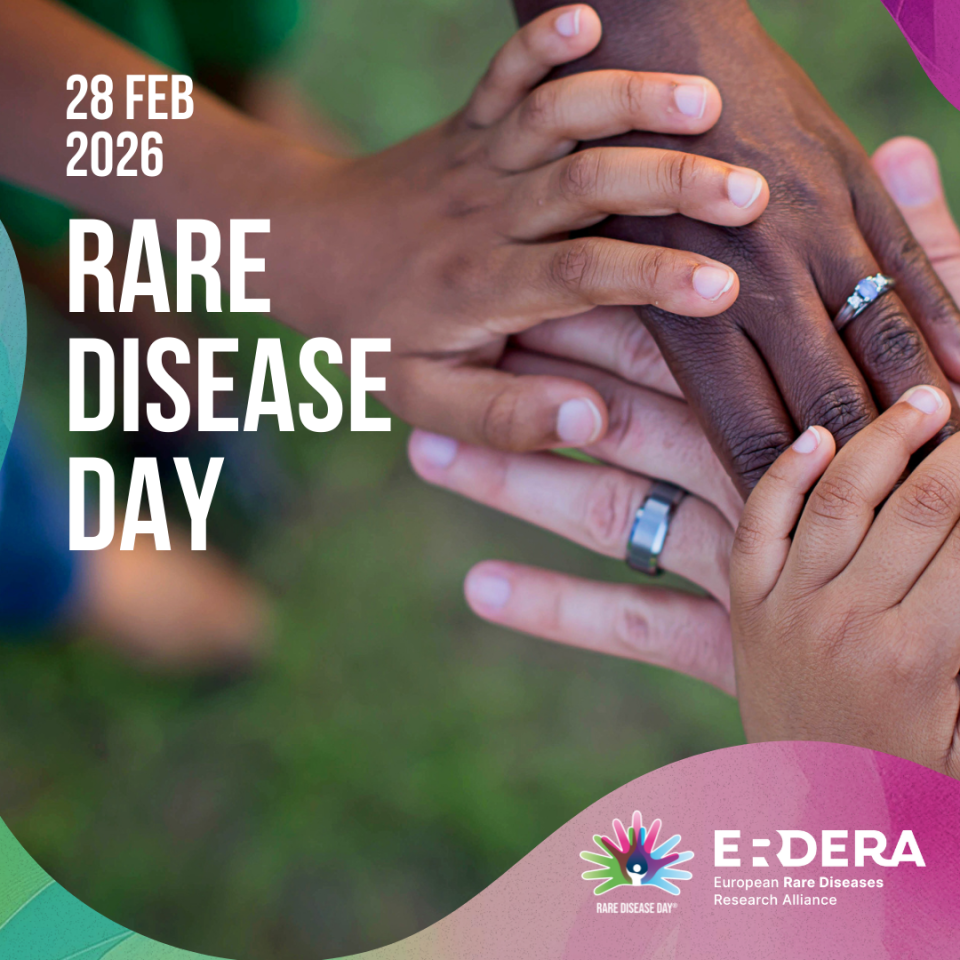
Download the visuals
Copys for social media
General text
On Rare Disease Day, we reaffirm our commitment to the 30 million people living with rare diseases across Europe. 🌍
Early diagnosis, prevention, and innovative treatments remain critical, yet gaps persist in research, care, and access across the continent. ERDERA brings together expertise in clinical practice, data, training, policy, and more to address these challenges, helping to accelerate progress and deliver meaningful impact for people living with a rare disease and their families.
Proud to be part of a community making more impact than you can imagine.🤝
#RareDiseaseDay #ERDERA #RareDiseases #EuropeanResearch #InnovationInHealth
Partner text
On Rare Disease Day, we reaffirm our dedication to advancing care and support for the 30 million people living with rare diseases across Europe. 🌍
As a partner in ERDERA, we contribute to a shared mission: advancing prevention, enabling earlier and more accurate diagnosis, and supporting the development of improved treatments. By working together across borders and disciplines, we can deliver meaningful, lasting impact for people living with a rare disease and their families.
Because in rare diseases, collaboration is not optional — it is essential. 🤝
#RareDiseaseDay #ERDERA #RareDiseases #EuropeanResearch #InnovationInHealth
Short text
#RareDiseaseDay is an opportunity to recognise the 30 million people in Europe living with a rare disease. As a partner in #ERDERA, we are working together to advance prevention, diagnosis, and treatment.
Proud to be part of a community making more impact than you can imagine. 🤝
ERDERA stories for Rare Disease Day
Rare Disease Day 2026: towards equity in rare disease care — reducing diagnostic delay, improving treatment pathways, and widening access to research
Now in its second year, the European Rare Disease Research Alliance (ERDERA) is helping connect Europe’s rare disease research, data and clinical research capacity to support more consistent progresses for patients.
👤5 persons per 10 000
Rare diseases are individually uncommon in the EU.
🌍Over 36 million people
Over 36 million people in the EU live with a rare disease (around 8% of the population).
📚6 000 to 8 000
Identified rare diseases in the EU.
⏱️Four to five years
Average diagnostic time reported in a recent EU Survey on Rare Diseases.
💊About 95%
About 95% of known rare diseases still lack an approved treatment.
Beyond these clinical hurdles, low awareness and stigma deepen the isolation felt by patients and their families, turning a medical challenge into a profound social burden.
Rare Disease Day (officially on 29 February, 28 February this year) is a timely occasion for media professionals and outlets globally to go beyond awareness and focus on delivery: what it really takes to reduce the diagnostic odysseys and advance on the development of therapies, translating research into better options for patients.
🛡️What ERDERA is doing
By bringing together a large, multi-country consortium (170 public and private partners across 37 countries from Europe and beyond), the mission of the European Rare Disease Research Alliance (ERDERA) is to position Europe as a leader in rare disease research and innovation, with a clear patient-centred aim: improve prevention, diagnosis, and treatment for the people affected.
In practice, this means bringing public and private partners together across Europe to strengthen research infrastructure and data-sharing, so that knowledge and evidence can move faster across borders and across diseases; facilitate patient access to clinical trials, including through better connectivity between researchers, clinical sites, and patient communities; and increase investment and aligning expertise to accelerate the translation of research into tangible patient benefit.
With an estimated overall budget of €380 million to 2031, ERDERA is designed to complement and reinforce national rare disease plans with practical collaboration, shared resources, and clearer routes for research to inform care.
Policy backdrop: what is changing
In parallel, the policy backdrop is also moving: the European Parliament’s Committee on Public Health (SANT) is preparing a report on an EU rare disease action plan, informed by the aforementioned survey results; while in December 2025 the European Commission agreed on a major reform on pharmaceutical legislation to focus on accessibility and innovation. Directive 2011/24/EU currently facilitates cross-border healthcare, critical for many rare disease patients in smaller countries.
For outlets covering health systems, innovation, and policy, Rare Disease Day is a natural peg for reporting what is changing — and what still needs addressing.
Story angles for your consideration
If you are planning Rare Disease Day coverage that touches on national rare disease plans, cross-border care, or equitable access to trials and specialised expertise, ERDERA can help with trusted interviewees, grounded examples, and context on how European collaboration aims to translate research into patient benefit.
ERDERA can connect you with respected voices across the rare disease ecosystem — scientists, data engineers, clinical practitioners, patients and patient representatives, and policy experts — to help evidence and explain what is changing, what remains challenging, and what that entails for people living with a rare disease.
Below are three example approaches we can support you with.
They are intended as contextual entry points, each with evidence hooks and individuals you can speak to. You may feel free to propose other approaches; ERDERA will be happy to support you.
1. From fragmented cases to a shared European resource: ERDERA’s 10 000 harmonised datasets from unsolved rare disease cases
In its first year, ERDERA brought together a unified collection of 10 000 harmonised genomic and phenotypic datasets from unsolved rare disease cases across European centres, hosted within the ERDERA Diagnostic Research environment.
Beyond the number itself, the step-change is practical: moving from fragmented, institution-specific case files to a shared, standardised dataset that can be searched, compared and analysed responsibly across multiple countries and systems.
This matters because rare disease data can be rich, but not easily comparable. Different sites may record similar clinical features in different ways, use different naming systems, or structure files differently. So, the work is also about governance and trust, not only technology. ERDERA has implemented a joint data controllership model and a formal data-sharing framework agreement intended to support secure, auditable and compliant use.
ERDERA can support this angle by connecting you with specialists who can explain — in practical terms — what it takes to standardise, quality-control and govern sensitive health data across borders, as well as clinicians and patient representatives who can speak to why “making data comparable” can translate into real diagnostic impact.
2. The diagnosis gap: what “four to five years” means for patients
36 million people in the European Union (about 8%) are affected by a rare disease. Against that scale, the reported average diagnostic time of four to five years is a EU health system problem, not an isolated case.
In practical terms, late or missed diagnosis can mean lost opportunities for targeted care or trial participation, yet for patients it can involve repeated tests or unnecessary interventions, avoidable deterioration, and a premature death.
What would it take to shorten the diagnostic journey —primary care, regional hospitals, specialist centres—and why has that proven so difficult across countries? The answer often sits in the join between clinical expertise and data: recognising patterns across fragmented records, ensuring high-quality phenotyping, connecting cases to specialist networks, and supporting clinicians with decision-making without overpromising technology.
ERDERA can add depth here by offering access to scientists and practitioners working at the point where evidence meets care, and to data engineers and infrastructure experts who can explain (plainly) what “good data sharing” requires. Patient and patient representative voices can ensure the story stays grounded in what delays feel like, what “answers” change, and what good communication looks like when uncertainty remains.
3. National rare disease plans: what they can change in real life — and what they cannot fix without cross-border and EU-level connections
Around Rare Disease Day, many countries develop or update national rare disease plans. The key question for patients is not whether a plan exists, but what it changes in day-to-day reality: how quickly someone gets referred, where expertise sits, whether multidisciplinary care is reachable, what happens a test or team is not available domestically, and how patients are supported to navigate reimbursement, travel, follow-up and long-term care.
This angle can explore what a national plan means in practice across the whole pathway and how much of that depends on linkages beyond national borders. It also provides a natural bridge to the wider EU framework: citizens’ rights to cross-border healthcare and reimbursement sit alongside national implementation, information provision, and administrative processes.
ERDERA can support media outlets by identifying national practitioners, policy experts, data/infrastructure engineers, and patient/patient representative voices on what improves (or fails to) when a plan is announced. We can assist you with interpreting policy measures on a national scale, and in the wider context of the EU.
Resources for media
- Rare Disease Day (global campaign hub) – key facts, stories, campaign framing and ways to get involved
Use for the canonical “what/when/why” of Rare Disease Day and current campaign context.
Rare Disease Day website - EURORDIS Rare Disease Day page – European perspective and positioning (equity, access, community mobilisation)
Good for framing Rare Disease Day in Europe and referencing the campaign’s aims in plain language.
EURORDIS: Rare Disease Day - EURORDIS newsroom – press releases, statements and contacts for media enquiries
A reliable source for quotable lines and policy context.
EURORDIS newsroom - VASCERN ERDERA page – explainer from a European Reference Network (ERN) community
Useful background on how ERDERA relates to the wider rare disease ecosystem and ERNs, in accessible language.
VASCERN: ERDERA - ERN-EYE ERDERA page – ERN-based summary and links out to press material
Good for triangulating descriptions and explaining the “why now / what next” in a concise format.
ERN-EYE: ERDERA - Rare Disease Day “events near you” – find local hooks and spokespeople (events listed by geography)
Practical for regional desks and outlets seeking a local angle, imagery, and on-the-ground access.
Rare Disease Day: find events - Rare Disease Day official YouTube channel – campaign videos and shareable audiovisual material
Useful for embedding clips, pulling official quotes/lines, and supporting broadcast/digital packages.
Rare Disease Day on YouTube
Related Articles