Your Tag: genetics

June 12 - June 15
The conference will take place in Rotterdam on 12–15 June 2027 and is planned as a hybrid event by the European Society of Human Genetics.
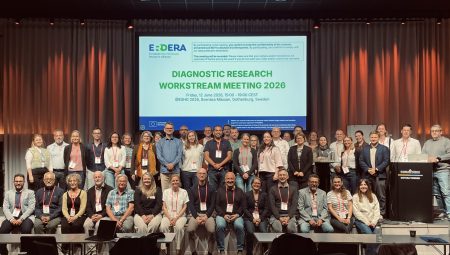
At the European Human Genetics Conference 2026 in Gothenburg, ERDERA’s Diagnostic Research Workstream reviewed progress, highlighted early results and used a major European genetics meeting to examine how advances in data sharing and genomic analysis may strengthen rare disease diagnosis across countries.

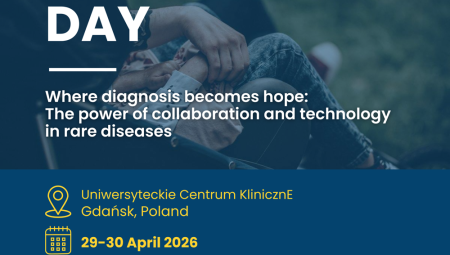
April 29 - April 30
This meeting will focus on practical approaches to phenotyping and diagnosis in undiagnosed conditions, including how to define next steps when a diagnosis remains uncertain, and how to strengthen pathways and collaboration around undiagnosed care.
In its first year, ERDERA has brought together 10 000 harmonised genomic and phenotypic datasets from unsolved rare disease cases across Europe, creating a secure, standardised and scalable resource.
Long-read genome sequencing (lrGS) has the potential to consolidate current standard-of-care (SoC) diagnostics into a single assay, but its accuracy and clinical utility in routine practice have not been established at large scale.
A multi-omics approach combining proteomics, transcriptomics, and exome reanalysis improved diagnosis of neurodevelopmental disorders, resolving uncertain variants and increasing diagnostic yield.
Effective collaboration between industry, academia, and patient organizations is essential to advance standardized platform technologies. A recent example is the newly launched European Rare Diseases Research Alliance (ERDERA).