
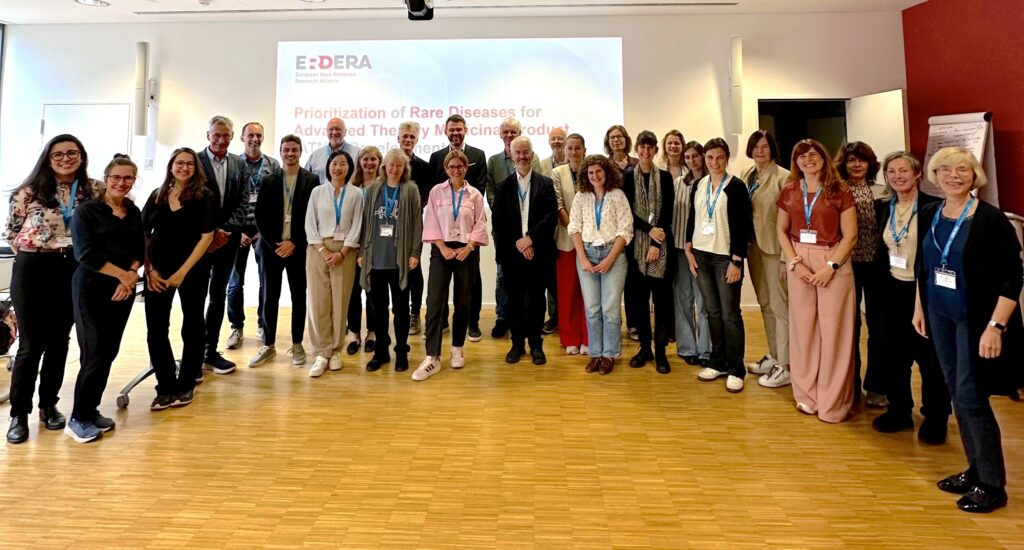
ERDERA hosted a two‑day, multi‑stakeholder workshop on 9–10 September 2025 in Heidelberg to advance a practical framework for prioritising rare diseases most likely to benefit from Advanced Therapy Medicinal Products (ATMPs).
The workshop forms part of ERDERA’s programme on ATMP development, linking directly to demonstrator planning and the wider set of services it is putting in place to support translational research.
Bringing together researchers, clinicians, patient advocates, industry representatives and policymakers from across Europe, the event focused on turning evidence and experience into a usable approach that can be applied consistently. It built on several months of preparatory work: a literature review, expert interviews and a recent multi‑stakeholder survey that asked contributors to weigh factors such as unmet medical need, psychosocial impact and research readiness.
Within ERDERA, Work Package 11 develops the methods and decision support needed to prioritise indications and align them with suitable ATMP technology platforms, creating a pragmatic route from prioritisation to demonstrator projects. It links closely with the Expertise Services Hub and the Acceleration Hub, drawing on the Clinical Research Network and the Data Services Hub so that scientific, regulatory and manufacturing considerations are addressed early and coherently.
Over two days, participants co‑refined and tested the draft framework and worked towards a companion guide that matches disease characteristics with appropriate ATMP technology platforms. This will inform a clear decision pathway—mapping disease categories to options such as gene therapy, cell‑based therapies and tissue engineering—so that teams can make earlier, more consistent choices about development routes.
The outputs will feed into ERDERA’s Rare Disease Prioritisation Tool for ATMP Development under its Work Package 11. As the framework and decision pathway are finalised and integrated into the tool, ERDERA will share next steps through its channels to enable wider use across its services and collaborations.