

(Inter)national Capacity Alignment
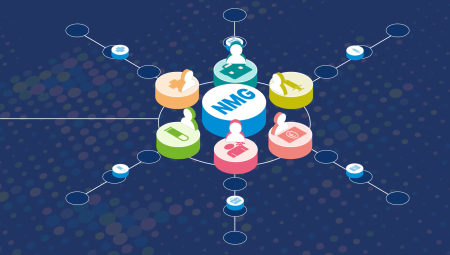
National Mirror Groups
Engagement of Under-represented Countries
Strengthening the participation of countries with limited critical mass in rare disease research, innovation, and policy.
By identifying specific needs and expectations and assessing structural barriers, the team develops guidelines and programmes, alongside targeted capacity-development actions and advocacy, to support emerging communities in:
- Accessing ERDERA funding calls, training opportunities, and data resources;
- Showcasing national strengths and existing expertise;
- Engaging in NMG activities on an equal footing with more established countries.
Global Collaborations
ERDERA’s vision extends beyond Europe. The partnership:
- Forges strategic alliances with complementary programmes and infrastructures,
- Hosts the IRDiRC Scientific Secretariat, strengthening the science-policy interface worldwide,
- Links Clinical Research Networks with global counterparts and patient organisations, and
- Aligns ERDERA methods with the research strategies of the European Reference Networks.
Programme highlights
A regular survey to establish the ‘state of the art of rare disease activities’ in each ERDERA country, train-the-trainer courses, the forthcoming Country Compass dashboard, the biennial conferences for international Clinical Research Networks and the IRDiRC activities ensure that evidence, expertise and solutions flow smoothly between national and international levels—ultimately targeting equitable progress for all people living with a rare disease, regardless of their country.
What are Underrepresented Countries (UC) in ERDERA?
Underrepresented Countries (UC) are places that need extra support to take part fully in ERDERA’s rare‑disease research.
A country is treated as UC if one or more of these apply:
- It is a Horizon Europe Widening Country, as defined by the European Commission to boost participation where R&I performance is lower.
- It is a Horizon Europe Associated Country with similar characteristics to the Widening group.
- It has consistently low or no participation/success in ERDERA or rare‑disease research activities.
- It is listed by the OECD as low‑ or lower‑middle‑income for international cooperation.
Current UC participating in ERDERA
Bulgaria
Cyprus
Czechia
Estonia
Greece
Georgia
Hungary
Ireland
Latvia
Lithuania
Morocco
Poland
Portugal
Romania
Serbia
Slovakia
Slovenia
Türkiye
How ERDERA uses this
- To target outreach, training, funding access and data/clinical research support so that patients, researchers and clinicians in these countries can benefit equally.
- The list is reviewed regularly to reflect Horizon Europe and OECD updates.
ERDERA is Calling Experts from Underrepresented Countries!
ERDERA is expanding its pool of specialists and is seeking experts from underrepresented countries.
By expressing your interest, you may be invited to participate in ERDERA activities, expert panels, and networking opportunities. You will also receive valuable information on funding opportunities, available services, training, and education programs.
Click here to apply.
You might also be interested in