

The European Medicines Agency (EMA) has opened a public consultation to guide the generation and assessment of meaningful proof-of-concept data for the development of medicinal products in paediatric oncology.
The availability of adequate proof-of-concept data is required prior to the initiation of paediatric clinical trials. In recent years, non-clinical proof-of-concept data have become increasingly central to justifying the initiation of clinical development in paediatric oncology, particularly where clinical evidence in children is limited or unavailable.
The EMA Paediatric Committee has observed an increasing number of Paediatric Investigation Plans (PIPs) in oncology that rely on a medicine’s mechanism of action, rather than its adult indication. This shift reflects the biological and clinical differences between paediatric and adult cancers. The trend is also confirmed in a recent study conducted within the TEDDY network and published in September 2025, which shows an increase in the proportion of non-adult-driven indications in the EU after 2018, along with the number of PIPs approved to develop paediatric-only indications.
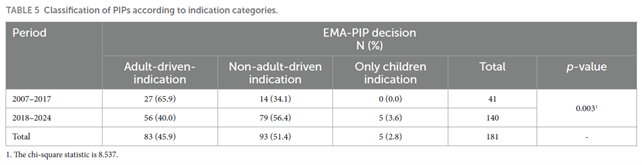
Source: Reggiardo et al. (2025), Frontiers in Medicine 12:1642279. doi: 10.3389/fmed.2025.1642279
A further increase is expected with the proposed reform of European pharmaceutical legislation, as one of the proposed measures is the obligation to develop paediatric medicines based on their mechanism of action.
This consultation also resonates with rare disease research, where evidence generation is often challenged by small populations, biological specificity and limited clinical precedents. In paediatric oncology, these issues are particularly acute: robust proof-of-concept data can help determine whether a medicine has a sound scientific rationale for testing in children, while avoiding unnecessary or poorly justified clinical studies. Clearer regulatory expectations could therefore support more responsible, efficient and patient-centred development pathways in areas where evidence is difficult to generate.
Given the absence of a structured regulatory framework for non-clinical proof-of-concept studies and the expressed interest from academic stakeholders in developing such a framework, EMA has drafted a concept paper outlining key elements considered important for guiding these assessments and associated development activities in paediatric oncology. The document identifies high-level recommendations for generating and assessing meaningful proof-of-concept data, lists key evidence domains for a proposed weight-of-evidence assessment, and proposes a process for consulting stakeholders, including academic experts and consortia.
The consultation is open for comments until 30 June 2026. Stakeholders can provide input via the EMA page: Development of anti-cancer medicinal products in paediatric patients – Scientific guideline.