
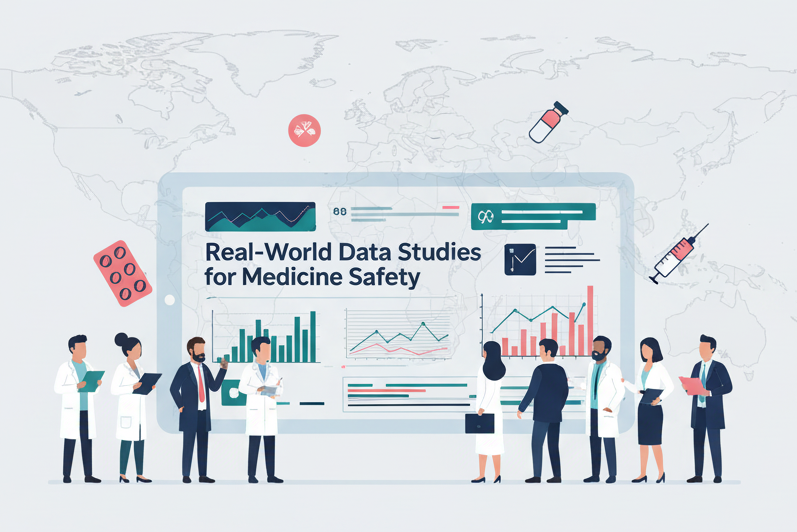
On 10 October the European Medicine Agency (EMA) published the “ICH M14 Guideline on general principles on planning, designing, analysing, and reporting of non-interventional studies that utilise Real-World Data for safety assessment of medicines”, which will come into effect on 18 March 2026.
The aim of this guideline is to recommend international standards for, and promote harmonisation of, the general principles on planning, designing, analysing, and reporting of non-interventional studies that utilise “fit-for-use” or “fit-for-purpose” data for safety assessment of medicines, including vaccines and biological products.
The document also provides recommendations and high-level best practices for the conduct of non-interventional pharmacoepidemiologic safety studies to streamline the development and regulatory assessment of study protocols and reports.
It also highlights that post marketing non-interventional studies may provide valuable information supporting the benefit/risk assessment of medicines in special populations (e.g. children or people with rare diseases), where they may require linkage to complementary data sources and unique considerations, in addition to the concepts applying to any non-interventional study described in the document.
These recommendations are intended to reduce the need for multiple studies addressing the same safety concerns across different regulatory regions, enhance regulatory acceptance of protocols, and ultimately support more efficient and informed regulatory decision-making.
This document represents an important step in the regulatory framework as the first ICH guidance on the integration of RWD in the medicines lifecycle.
You can consult the guideline here: ICH M14 guideline on general principles on plan, design and analysis of pharmacoepidemiological studies that utilize real-world data for safety assessment of medicines – Scientific guideline | European Medicines Agency (EMA)