Data services

Here you can find a mix of human and technical support to help you apply the Data Service Hub methods and tools effectively. To support making all involved resources FAIR, ERDERA has worked on FAIRification services, guidance, tooling and training. 

Navigate below to find out more about your topic of interest! 

dh

FAIRification

Currently, data sources and valuable research resources remain scattered, disconnected, and unable to communicate effectively, both semantically and technically.


To address this challenge, ERDERA has developed the Virtual Platform, designed to provide a single point of entry for discovering, querying, and eventually accessing patient registries, biobanks, genomics and multi‑omics repositories, knowledge bases, research resources (including animal models and cell line libraries), omics deposition and analysis platforms, as well as translational and clinical research materials and services in a coordinated manner.


The Virtual Platform is made possible through the added value gained from implementing the FAIR principles, which enable data to be discovered, indexed, integrated, and reused under clear and transparent conditions. Applying these principles also facilitates the automated and secure management of data with minimal human intervention.


To support the FAIRification of all participating resources, ERDERA has developed a suite of FAIRification services, guidance, tools, and training materials.

FAIRification Resources

FAIRification Stewards Service

Smart Guidance

FAIRopoly

Trainings

General FAIR Guidance

FAIRification Objectives

Information for FAIR software providers

FAQs

You might also be interested in

A legislative own initiative file in the Parliament’s new public health committee sets out what an EU “rare disease action framework” could look like — and why it could change how Europe measures progress for patients.
Drawing on Europe-wide patient and carer surveys, ERDERA highlights how gender can shape diagnostic delays, care burden and the evidence base for rare-disease research.
European Parliament research service assessment, published in February 2026, identifies 31 measures that could form an EU rare disease action plan, highlighting European Reference Networks and cross-border collaboration including ERDERA as drivers of EU added value.
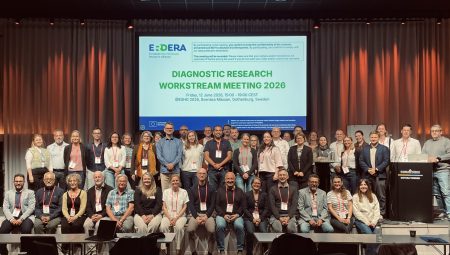
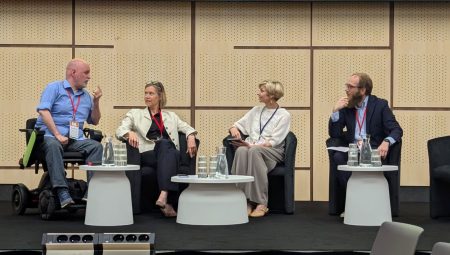
This meeting will focus on practical approaches to phenotyping and diagnosis in undiagnosed conditions, including how to define next steps when a diagnosis remains uncertain, and how to strengthen pathways and collaboration around undiagnosed care.