The EURORDIS Open Academy accompanies patient advocates and researchers by offering rare disease-specific comprehensive training programmes that empower them with the knowledge, skills and confidence they need to engage with different stakeholders as equal partners.
Since 2008, EURORDIS has been providing training programmes aimed at empowering patients and researchers to ensure they have the confidence and knowledge needed to bring their expertise to discussions on health care, research and medicines development with policy makers and industry, clinical diagnosis and data in rare disease research. As of 2024, the Open Academy has trained more than 800 patient advocates in person from 51 countries and over 4350 people from 166 countries have benefited from the e-learning.
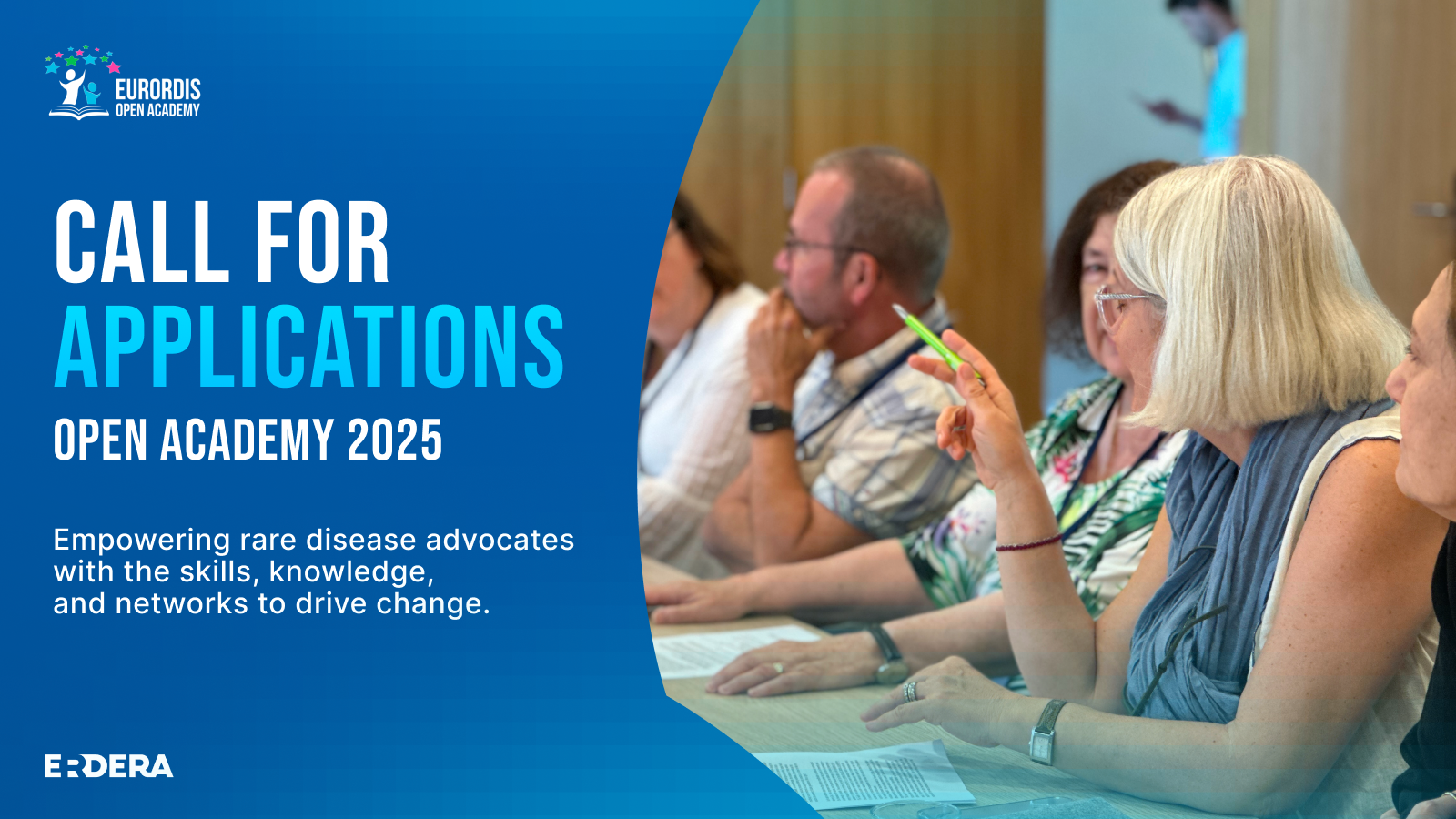
The EURORDIS Open Academy enters a new era under the European Rare Diseases Research Alliance (ERDERA) partnership. The Open Academy Schools 2025 (https://openacademy.eurordis.org/open-academy-schools-2025/) offer three different training programmes for patient advocates and young researchers with a blended learning approach, including eLearning courses, webinars and in-person training as well as research visits and networking opportunities on medicines research and development, scientific innovation and translational research, and the fundamentals of rare disease research data.
Landing pages:
- Open Academy Website: https://openacademy.eurordis.org/
- Open Academy Schools 2025 and launch of applications: https://openacademy.eurordis.org/open-academy-schools-2025/